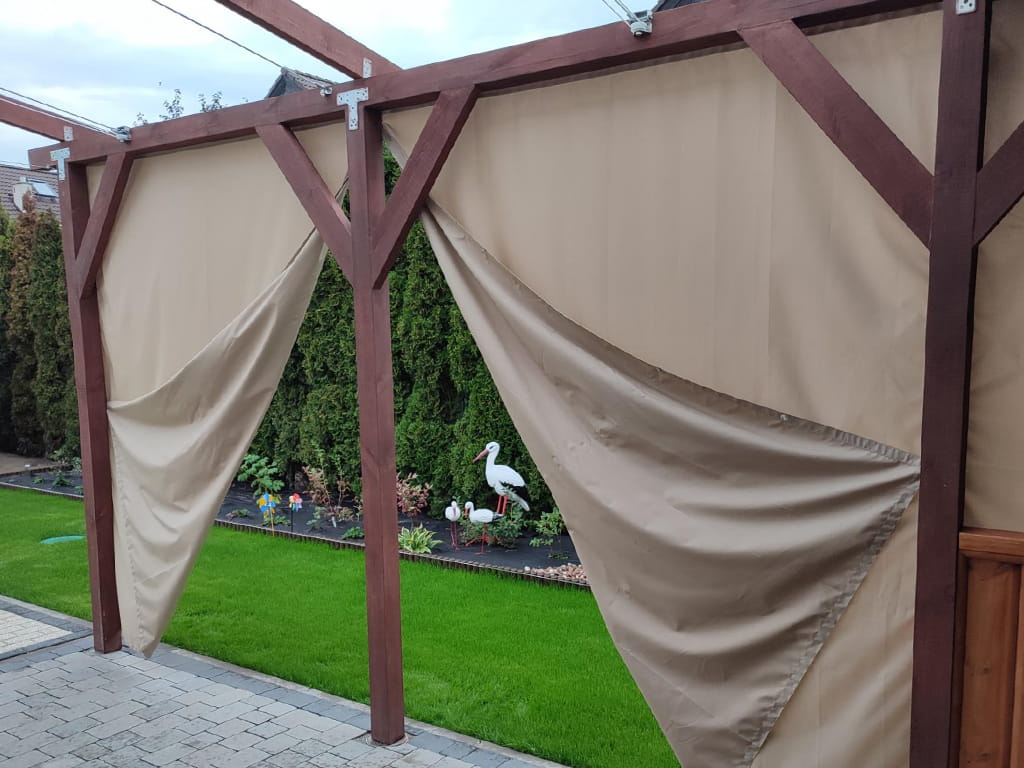
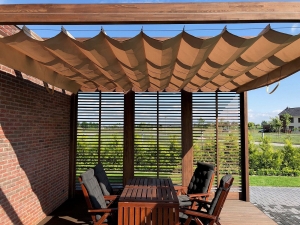
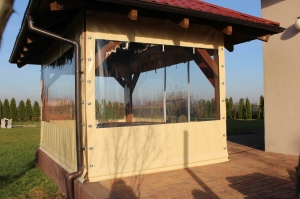
Outdoor curtains are a practical and stylish way to add privacy, shade, and comfort to patios, pergolas, balconies, and gardens. They can be hung using rods, steel cables, ceiling tracks, or no-drill methods, depending on the space. With weather-resistant fabrics and proper installation, they help protect against sun, wind, and bugs while creating a cosy outdoor retreat.
(1/2)
How to secure sun sails against wind?
To secure a sun sail, focus on proper installation and reinforcement.
Use solid mounting points and maintain correct tension and slope. This reduces wind pressure and improves stability.
Professional solutions include:
- reinforced edges with steel cable
- UV-resistant stitching
- high-quality mounting hardware
These elements significantly increase durability.
In strong winds, it is recommended to retract or remove the sail.
How to Install a Sun Sail in Your Garden
Installing a sun sail is one of the easiest ways to create shade in your garden or on a terrace. However, a proper installation requires more than just attaching fabric between points.
The most important factors are stable mounting points, correct tension and proper material selection. A sun sail works as a tensioned structure and transfers load to its fixing points.
Material choice is essential. Breathable fabrics such as HDPE allow air and water to pass through and can be installed flat. Waterproof materials such as PVC or Decor must always be installed with a slope to allow rainwater drainage.
During installation, the sail should be tensioned gradually and evenly. Uneven tension or weak mounting points can lead to deformation and reduce durability.
For best results, the sail should also be installed at a slight angle, even when using breathable materials. This improves performance and ensures better long-term stability.
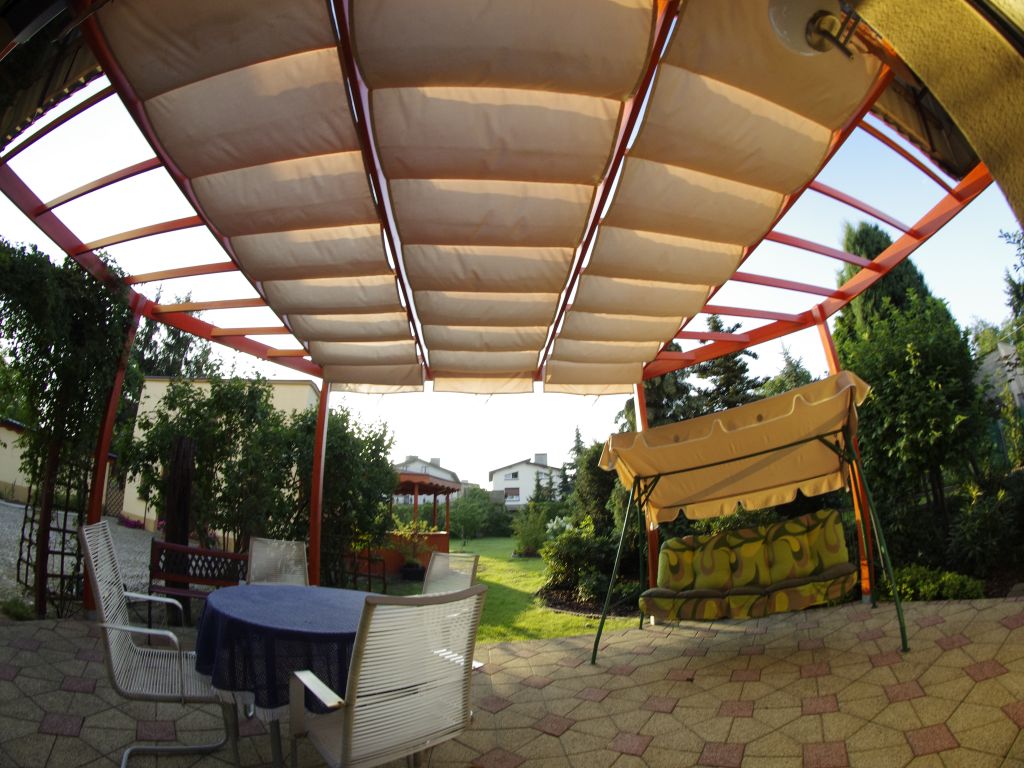
Correct tilt is essential for the proper performance of outdoor shading systems such as sun sails, Roman blinds and retractable shade sails.
A well-designed slope improves rainwater drainage, reduces fabric stress and maintains stable shading throughout the day. Incorrect installation can lead to water pooling, uneven tension or shade escaping from under the sail as the sun moves.
This guide explains how shading systems should be tilted when installed on pergolas, terraces or building walls.
The maximum size of a shade sail depends on several technical factors, including material strength, wind exposure and the distance between mounting points.
In most installations, a shade sail performs best when the surface area does not exceed around 20 m² and the maximum side length remains within 7 metres. Larger sails are technically possible, but they require stronger mounting structures and careful design to ensure proper tension and stability.
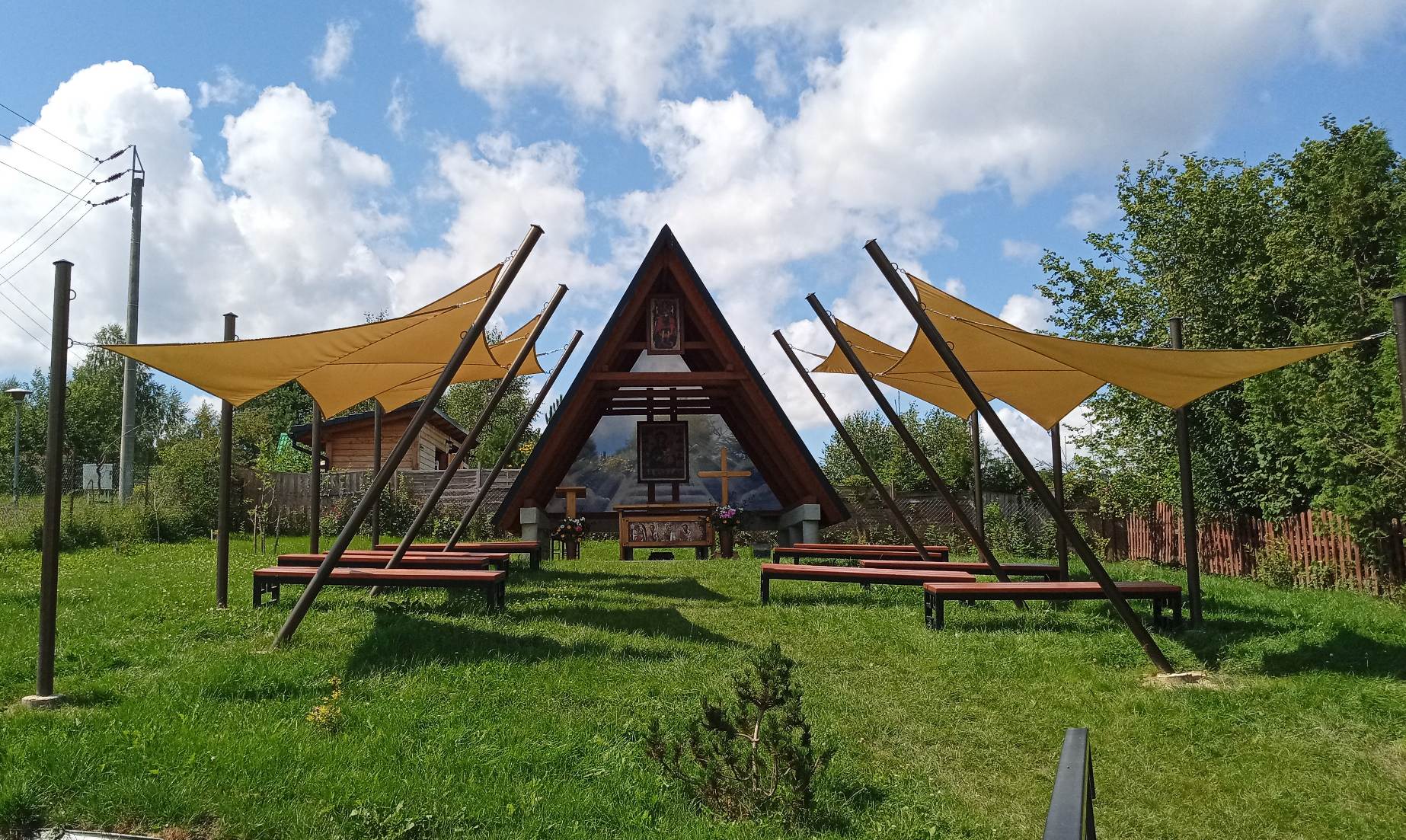
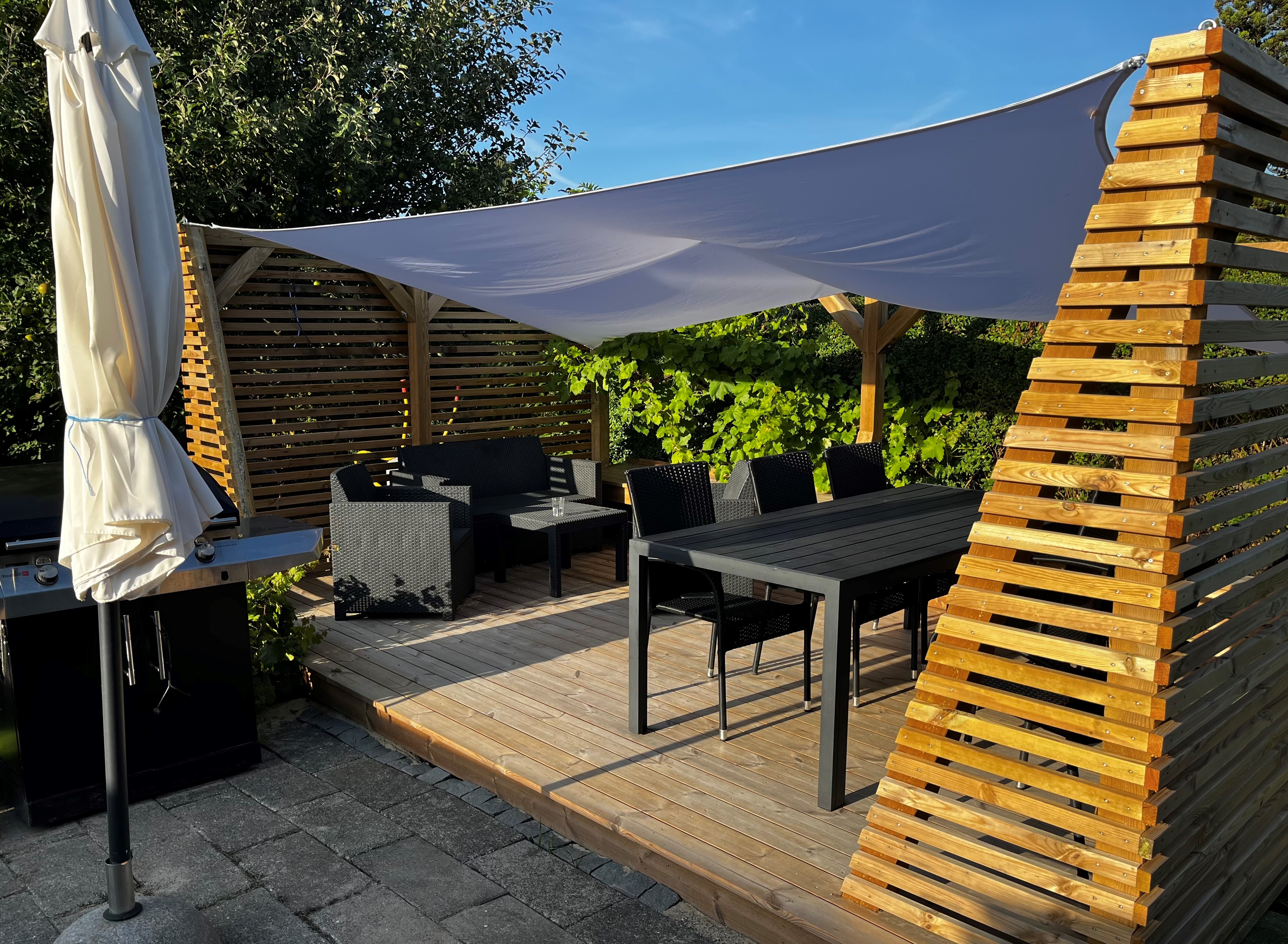
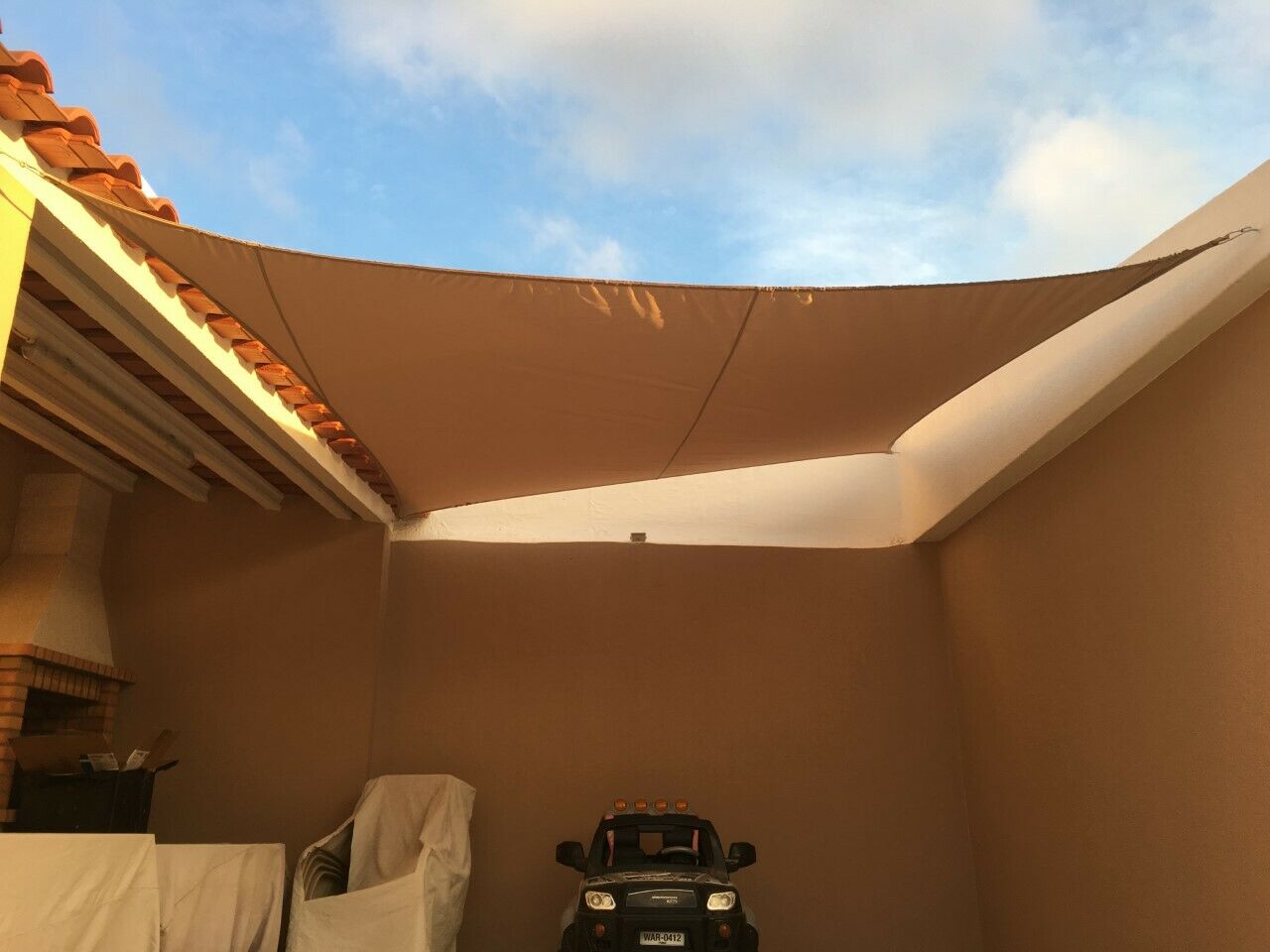
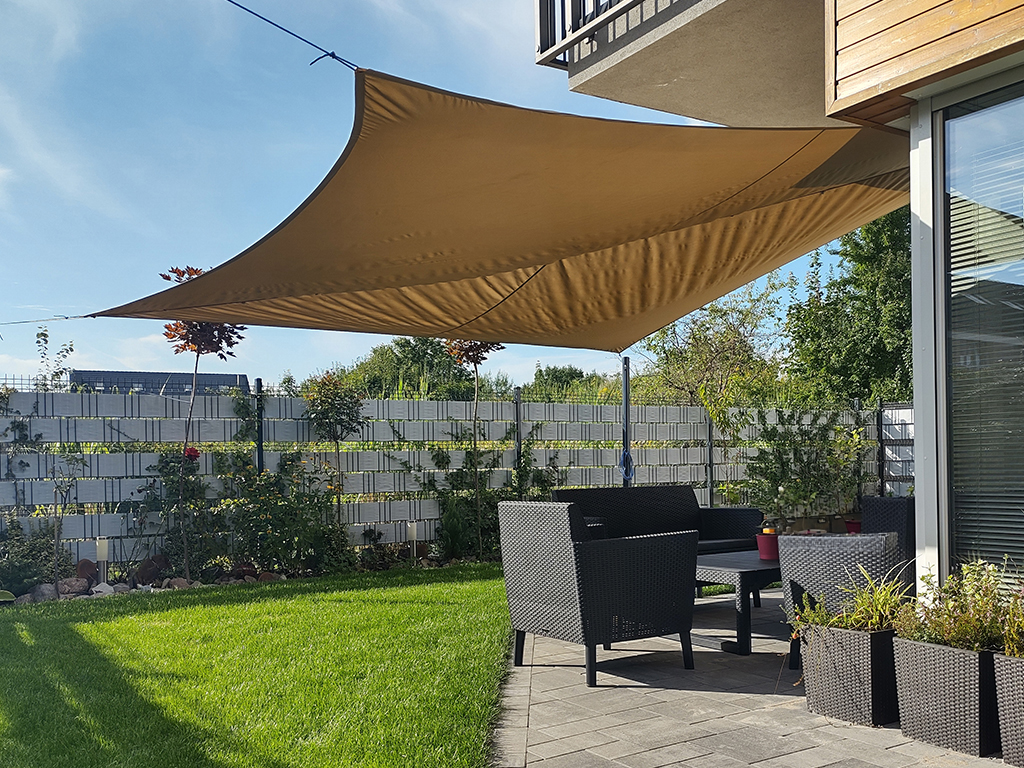
Corner-mounted sun shade sails are tensioned fabric structures designed to create shade over patios, terraces and garden seating areas. Their stability comes from correct positioning of mounting points and balanced tension across the sail surface.
Shade sails are not designed to be perfectly flat. Instead, they have concave curved edges that allow the fabric to tension evenly and distribute loads to the corners. This construction helps prevent sagging and improves wind resistance.
Shade sails are stylish and practical, but small mistakes in planning, fabric choice, or installation can lead to costly problems. Learn the most common shade sail errors and how to avoid them to ensure durability, safety, and long-term outdoor comfort.
Shade sails are a smart and stylish way to create comfortable outdoor shade. With proper planning—accurate measurements, the right shape, and suitable materials—they offer effective sun protection and long-lasting performance, enhancing patios, gardens, and relaxation areas throughout the season.
Shade sails have become an increasingly popular solution for creating comfortable outdoor spaces in patios, gardens, and commercial areas. These versatile fabric structures offer excellent sun protection and aesthetic appeal, but like any outdoor installation, they can develop problems over time.
Creating a comfortable, shaded retreat in your garden begins with selecting the right shade sail. The perfect shade sail transforms your outdoor living space into a personal getaway while providing essential protection from harmful UV rays. However, finding the correct size is crucial for both functionality and longevity.
Installing a shade sail is a practical and stylish way to create a comfortable outdoor space, whether in your garden, patio, or conservatory. A well-installed shade sail not only provides essential UV protection but also enhances the aesthetics of your home. This step-by-step guide will help you plan, install, and maintain your shade sail for long-lasting performance.
Proper tensioning is the key to a durable and visually stunning shade sail. Learn expert techniques, from turnbuckles to tension straps, to achieve a flawless, professional-grade installation. Avoid sagging, enhance water drainage, and extend your shade sail’s lifespan with these pro tips.
Latest articles