(1/2)

How to protect sun sails from the wind?
How to Secure Sun Sails Against Wind?

How to secure sun sails against wind?

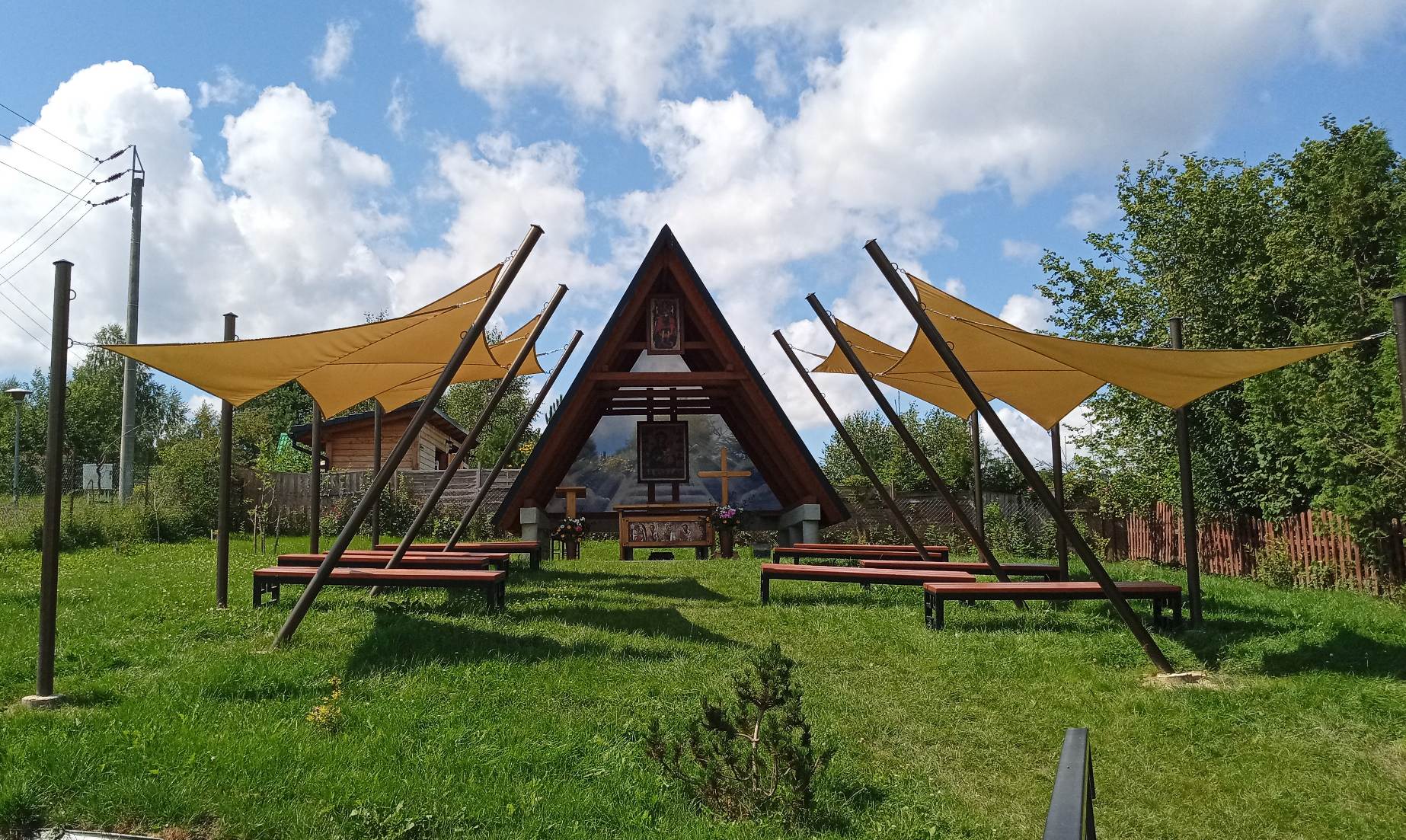
To secure a sun sail, focus on proper installation and reinforcement.

Use solid mounting points and maintain correct tension and slope. This reduces wind pressure and improves stability.

Professional solutions include:

  • reinforced edges with steel cable
  • UV-resistant stitching
  • high-quality mounting hardware

These elements significantly increase durability.

In strong winds, it is recommended to retract or remove the sail.

Terrace Sails: Sunshade or Waterproof – Which Should You Choose?

Waterproof sails (PVC or Decor) provide protection from rain and approx. 90–95% shading but require installation with slope and drainage. Breathable sails (HDPE or Mesh) allow airflow, are easy to install and maintain, but do not protect from rain. Optional drainage eyelets in Decor sails can support water management but do not replace proper installation.

How to choose the perfect waterproof sail for your garden?
How to Choose the Ideal Waterproof Shade Sail for Your Garden?

A waterproof shade sail is one of the most practical ways to protect your garden seating area from both sun and rain. Unlike traditional umbrellas, shade sails provide larger coverage, modern aesthetics and flexible installation options.

The most important factor when choosing a waterproof shade sail is the material.

For many garden applications, Decor 200 g/m² fabric provides effective sun protection and resistance to light rain. It is commonly used over patios, terraces and seating areas where occasional showers occur.

If full rain protection is required, PVC 650 g/m² is the recommended material. This heavy-duty fabric is completely waterproof and designed for demanding outdoor environments.

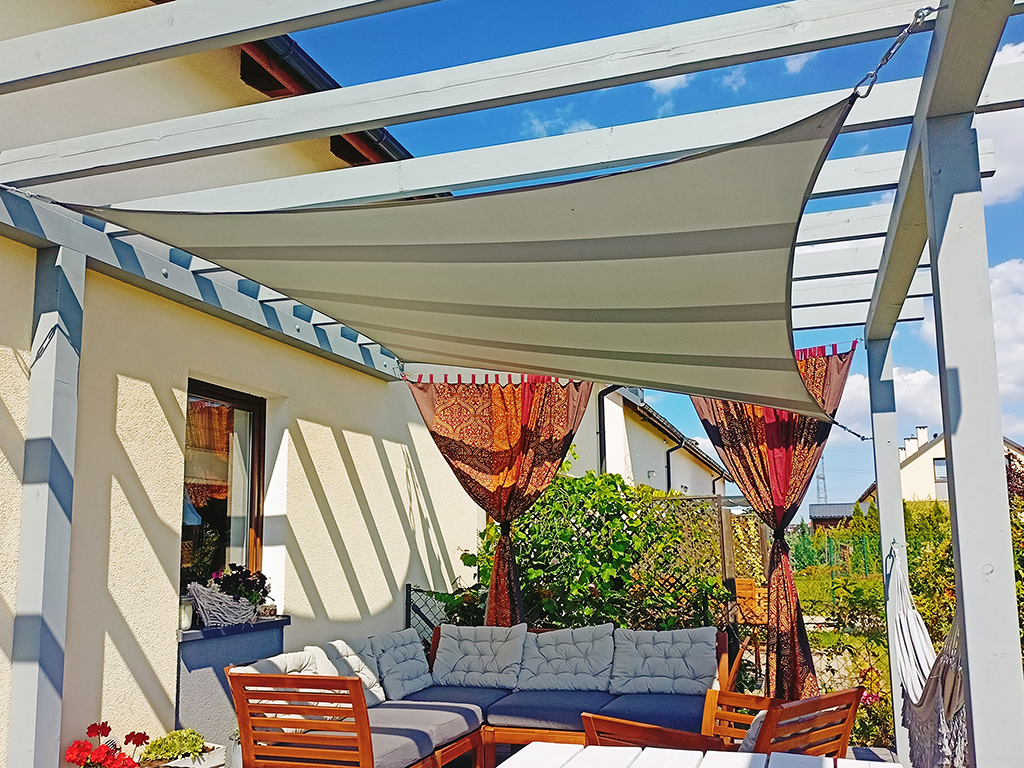
The shape and size of the sail also influence its effectiveness. Triangular sails create dynamic visual designs, while rectangular sails provide larger shaded areas over dining spaces or terraces.

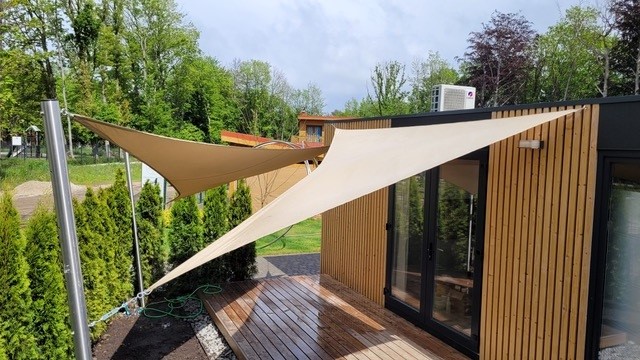
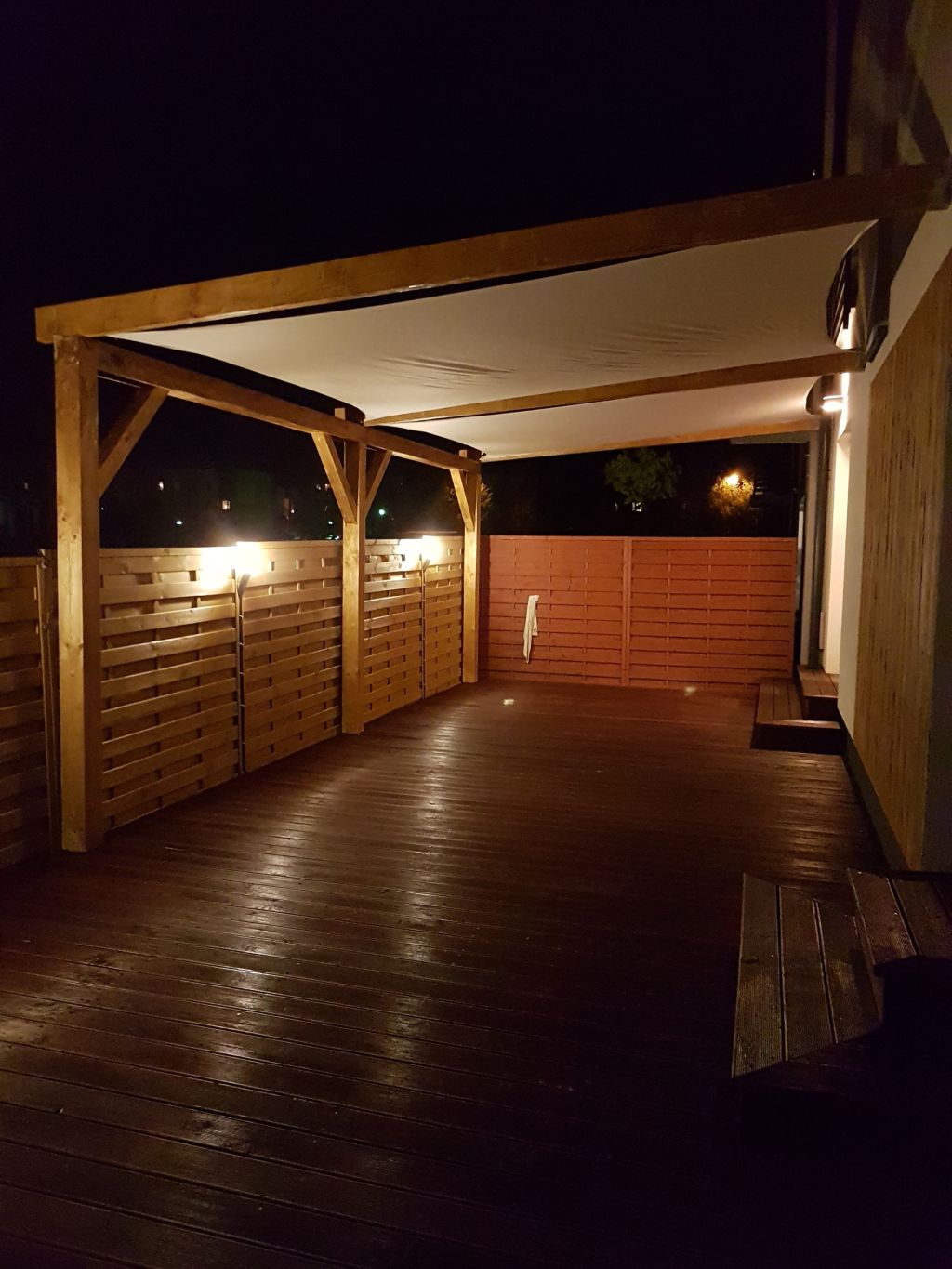
Proper installation geometry is essential. Waterproof sails should always be mounted with a slight slope to allow rainwater to drain properly.

Will water accumulate on the sail?
Will Water Accumulate on a Shade Sail? Guide to HDPE, Mesh, Decor and PVC Shade Sail Fabrics

Whether water accumulates on a shade sail depends mainly on the type of fabric used. Some materials allow rainwater to pass through, while others are fully waterproof and require proper installation slope.

Shade sails can be manufactured from HDPE mesh, Mesh fabrics, Premium Decor waterproof material or PVC 650 g/m². Each of these fabrics behaves differently during rainfall.

This guide explains how water interacts with different shade sail materials and how to choose the right fabric for UK weather conditions.

How should a sail, Roman blind, or retractable sail be tilted?
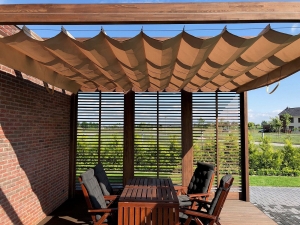
How Much Tilt Should a Sun Sail Have? Installation Guide for Shade Sails and Roman Blinds

Correct tilt is essential for the proper performance of outdoor shading systems such as sun sails, Roman blinds and retractable shade sails.

A well-designed slope improves rainwater drainage, reduces fabric stress and maintains stable shading throughout the day. Incorrect installation can lead to water pooling, uneven tension or shade escaping from under the sail as the sun moves.

This guide explains how shading systems should be tilted when installed on pergolas, terraces or building walls.

A Complete Guide: Tarpaulin for All Weather Conditions

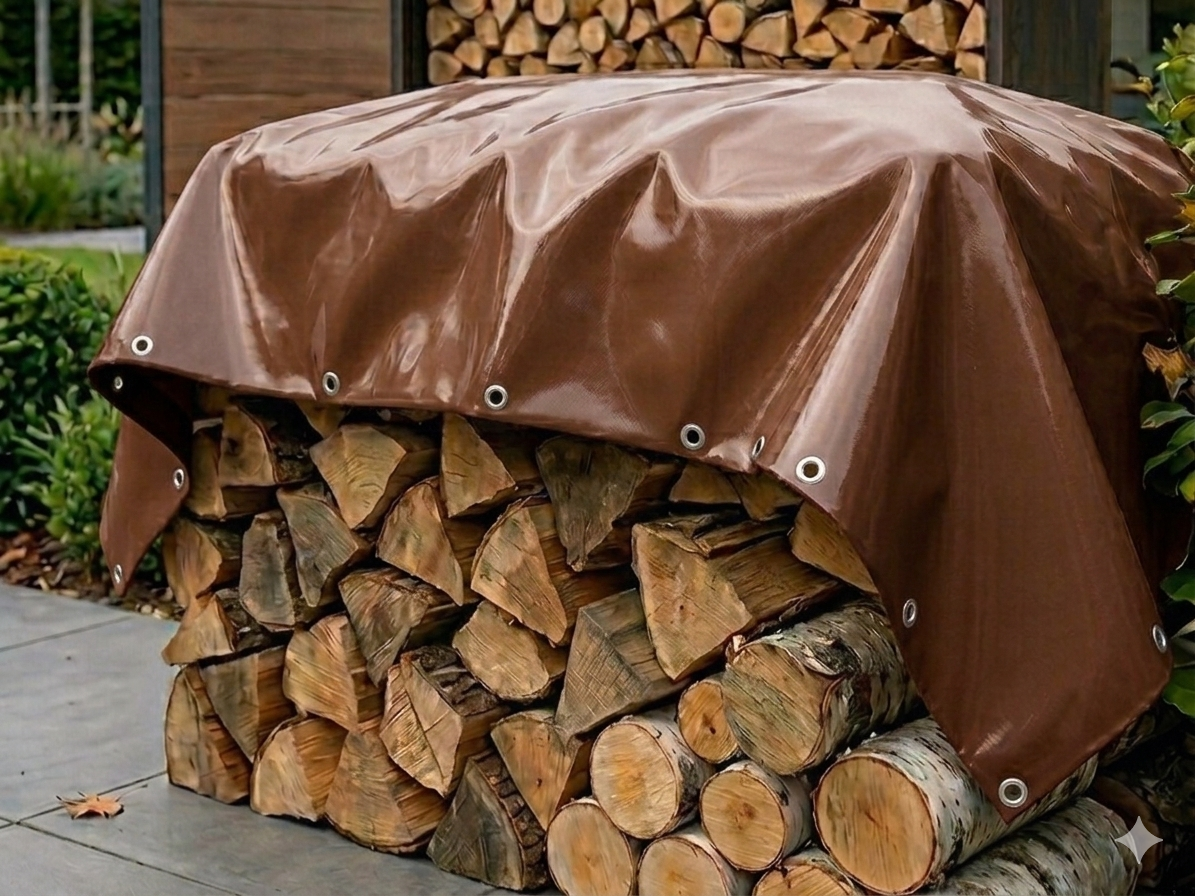
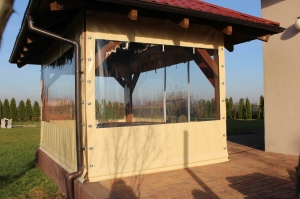
Tarpaulins provide reliable all-weather protection against rain, sun, wind, snow, and dust. Made from polyethylene, canvas, or PVC, they offer waterproofing, UV resistance, and strong wind performance when properly installed. Choosing the right material, slope, and fastening method ensures durability, prevents pooling, and maximizes long-term protection in any climate.

up
Shop is in view mode
View full version of the site
Sklep internetowy Shoper Premium