+48 518 537 385
 office@shade4you.eu


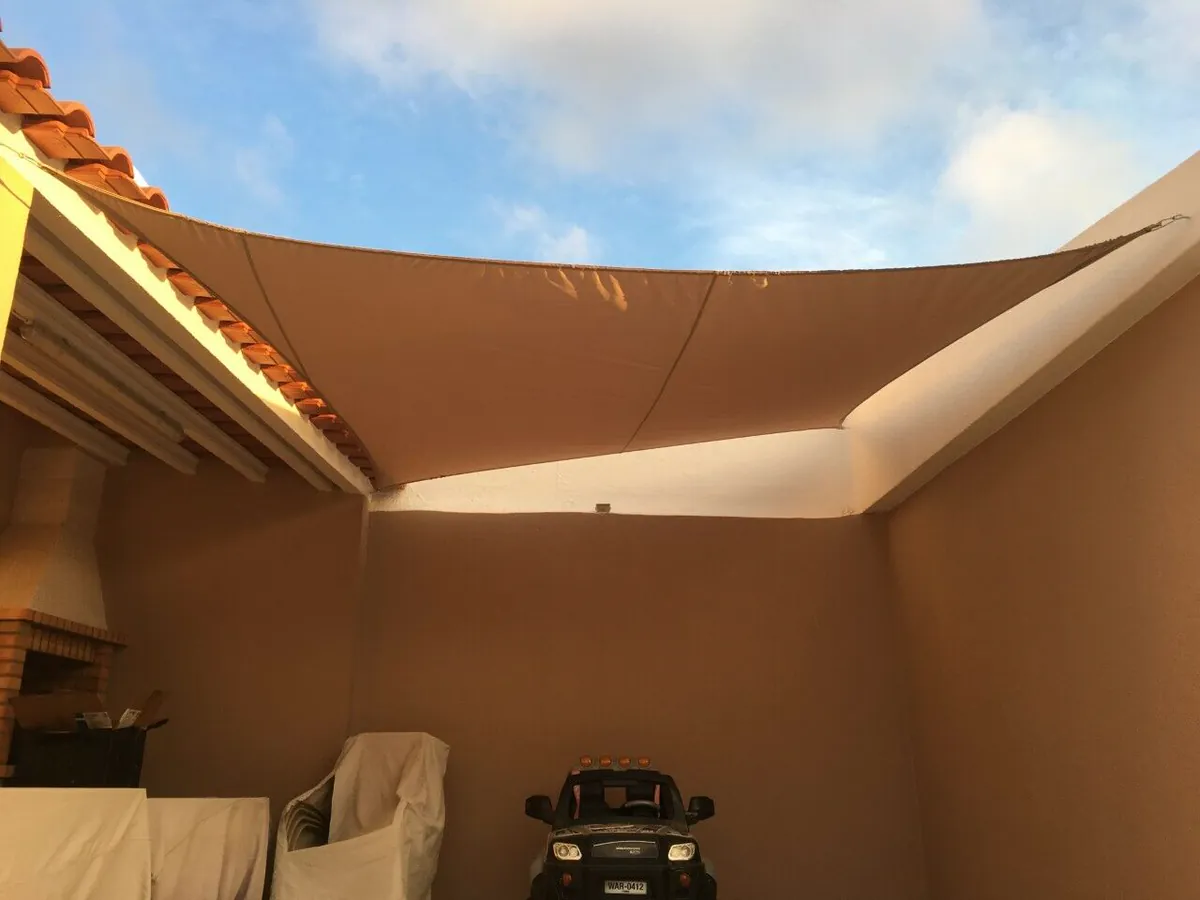
Wondering what the maximum safe size for a shade sail is before it becomes difficult to manage? Residential setups work best with a maximum size of around 20 m² (about 215 sq ft) to ensure stability, easy installation, and effective sun protection. This guide explains what sets these limits so your shade setup looks great, performs well, and provides lasting outdoor comfort.
What Is a Sun Sail or Shade Sail?
A sun sail or shade sail is a type of canopy, usually crafted in clean geometric shapes like rectangles, squares, or triangles. Inspired by a ship’s sail, it consists of a strong fabric sheet pulled tight between anchor points. These anchors can be dedicated posts or solid existing structures like a house wall, helping you turn an open area into a highly comfortable space.
These covers have become incredibly popular for good reason. They help protect you from harmful UV rays, making them perfect for backyard patios, playgrounds, and pool areas. When placed thoughtfully, they can also lower cooling costs by blocking direct sunlight from windows and doors. With their modern design, they effortlessly improve the style of any setting. Plus, they are flexible, often more affordable than permanent roofs, and offer an easy installation process.
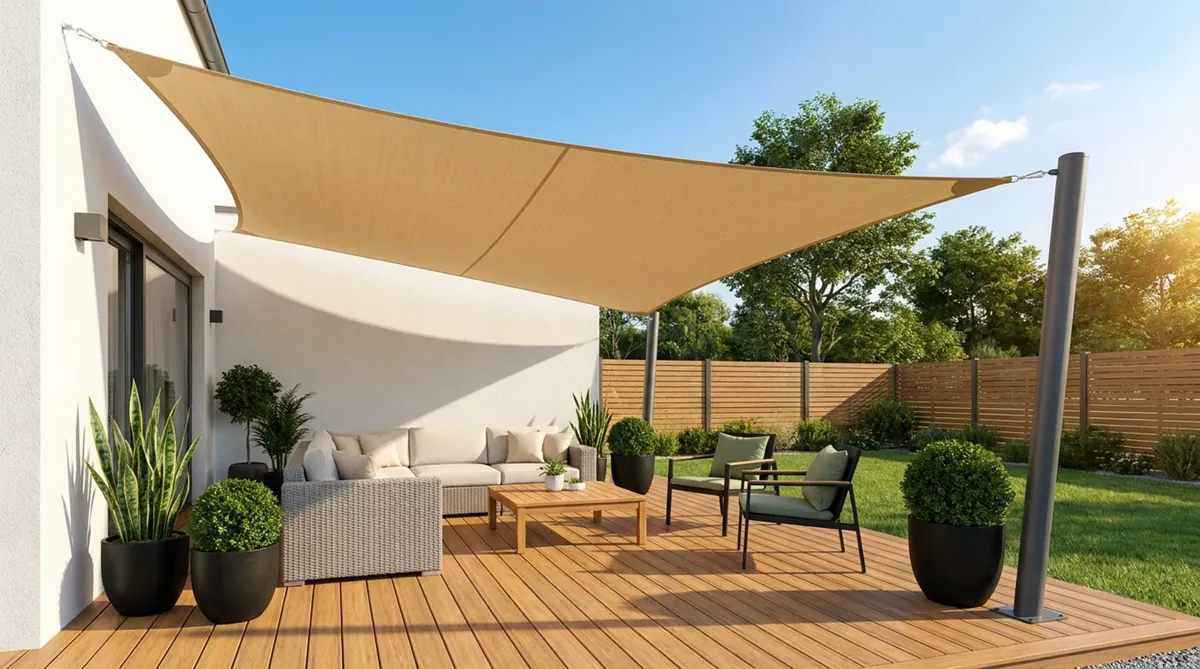
Differences Between Sun Sails and Shade Sails
People often use “sun sail” and “shade sail” interchangeably. The difference usually lies in the specific benefit you want to highlight. “sun sail” often points to blocking UV rays and getting relief from strong sunlight, while “shade sail” focuses on creating a cooler, shaded environment.
Most breathable sails use knitted High-Density Polyethylene (HDPE) fabric. This material lets air pass through, which prevents trapped heat and ensures excellent outdoor comfort. Because it is a breathable fabric, it is not waterproof-rain will simply pass through.
However, if you are looking for rain protection, waterproof shade sails made from tightly woven materials are your best choice. Each type stretches a little differently and is suited for specific outdoor needs.
How Does Size Impact Shade Sail Performance?
A very large shade sail sounds fantastic because it covers a massive area, but larger sails require careful planning. Size directly affects how stable the sail is, how long it lasts, and how well it performs. As the surface area increases, the forces acting on the high-quality materials and the support system rise rapidly.
That is why size is crucial for safety and long-term use. Wind forces and fabric stretch become much more noticeable as sails get bigger. Large designs need strong support components to ensure they stay secure and visually appealing.
Increased Wind Load on Large Sails
The bigger the sail, the more wind it catches. Wind pressure does not rise in a simple straight line as the sail grows-loads increase exponentially. Even moderate wind creates large forces on a big sail, putting heavy stress on the fabric, posts, and wall mounts. As a strict rule, sails should be taken down during strong wind gusts to prevent damage.
Good design helps manage everyday breezes. Setting corners at varying heights (for example, two corners high and two corners low) creates a 3D shape known as a hyperbolic paraboloid. This shape helps wind flow smoothly over and around the sail, reducing pressure buildup and minimizing the flapping that can cause wear.
Tension Forces and Fabric Deformation
Shade sails require strong, steady tension to keep their shape. Larger sails usually demand even more tension at the corners to hold the fabric stable. That higher tension increases the load on your entire support system: brackets, posts, wall anchors, and all tensioning accessories.
Larger spans also have a higher tendency to change shape. You might notice sagging in the middle or wrinkles along diagonals if not properly tensioned. At Shade4You, we account for normal fabric stretch during the manufacturing process by cutting the sail so it reaches its ideal size once properly tensioned. This slight stretch is helpful because it allows the fabric to absorb minor gusts and rain without damage.
Aesthetic Considerations in Size Selection
Size also dictates how your setup looks. A sail that is too large for the space, or installed without enough tension, can make the area look messy rather than sleek and modern. Knowing the practical size limits helps you achieve a visually balanced environment.
Trying to shade a massive area with one huge sheet can lead to a flat, unappealing look, especially if it sags. Large spaces often look and work better with several smaller sails. This spreads the loads across more points, handles wind better, and opens up creative design options like overlapping panels and varied corner heights.
Configure a made-to-measure shade sail →
Which Factors Determine the Maximum Size of a Sun Sail?
The maximum safe sail size relies on several connected factors. The fabric, stitching, anchors, posts, and even the ground where posts are set all influence how big your cover can be. Missing even one of these details can impact performance and longevity.
Large installations require a comprehensive approach. It is all about building a reliable, cohesive system.
Fabric Strength and Quality
The core of any outdoor shade is the fabric. For larger installations, high-quality materials like heavy-duty HDPE mesh or specialized waterproof fabrics are preferred because they maintain their shape over time. These materials offer controlled stretch, hold up well under tension, and provide effective sun protection.
Build quality is equally important. Strong, weather-resistant threads are used to ensure seams endure sun and outdoor elements. Good manufacturers always plan for a settling period; a newly installed sail will stretch slightly over the first few weeks until it reaches its final, fully tensioned dimensions.
Anchor Point Strength and Spacing
Your setup is only as strong as its anchor points. Each corner must be secured to something capable of holding significant tension. Whether you use reinforced walls or dedicated posts, those points need to be rock solid.
The distance from the sail corner to the anchor matters greatly. For stability, you generally need to add an allowance of about minimum 30 cm on each side of the sail for hardware and proper tensioning. If you have a 13 x 13 ft sail, your mounting area should ideally be between 15 x 15 ft and 19 x 19 ft. Too little space makes attaching hardware difficult, while too much space makes the fabric less stable in the wind.
Local Wind and Weather Conditions
Your local climate plays a major role in determining safe sizing. Wind is the most critical factor. Large projects see significant wind loads distributed across the anchor points, which is why engineering calculations are often needed for commercial setups.
Other weather elements matter too. Shade sails are not meant for winter conditions and must be taken down at the end of the summer season. For waterproof sails, water drainage is vital: a minimum slope of about 30% (roughly a 1:6 ratio) helps water run off easily so it doesn't pool. Temperature changes can also tighten or loosen the fabric, making adjustable tensioning hardware incredibly helpful.
Regulatory and Safety Requirements
Before putting up a very large structure, it is wise to check local building rules. Many oversized commercial installations require a building permit and engineered drawings showing wind-load calculations, post depth, and hardware strength.
These regulations ensure the design safely handles the forces of nature, protecting people and property. Working with knowledgeable experts makes navigating these requirements much easier.
Post Footings and Structural Support
For large spans, the posts and their footings are just as critical as the fabric. As the sail size grows, the forces on each post multiply, meaning footings must be deep and wide enough to resist uplift and sideways pulling.
Posts are typically thick-walled steel and are set in concrete footings about 3 to 6 feet deep. A common rule is to bury about one-third of the total post length. Heavy galvanized steel bases are widely used to guarantee strong ground support, proving that a solid foundation is essential.
Tensioning Hardware and Elongation Factor
Proper tension is mandatory for safety, longevity, and a crisp appearance. A tensioning device sits between each anchor and the galvanized steel ring at the sail’s corner. As mentioned in the spacing section, keeping a dedicated gap allows you to easily adjust the tension.
Turnbuckles are an excellent choice because they allow for fine adjustments. Advanced assembly kits can also feature nautical ropes and force multipliers for easier handling. Since fabrics naturally stretch over time, using high-quality tensioning hardware allows you to keep the sail tight and looking its best.
Browse waterproof shade sails →
What Is the Maximum Size for a Shade Sail?
There is no single magic number that fits every situation. The goal is always to balance generous coverage with structural safety. While commercial areas can support massive setups, home projects typically stay within limits that are safer and easier to maintain.
Going larger simply means bigger engineering requirements-stronger materials, sturdier supports, and potentially combining multiple sails instead of using just one.
Typical Maximum Dimensions for Residential and Commercial Sails
For most garden shade sails, a stable size is usually around 20 m² (about 215 sq ft). Within that range, square sails generally reach up to 4.5 x 4.5 meters (14.7 x 14.7 feet), while rectangular ones might have sides up to 7 meters (23 feet). Triangles can occasionally span a little longer due to how their tension is distributed.
Maximum Span Between Anchor Points
Spacing strongly affects the sail's stability. For residential installations, keeping the span between corners around 6 to 8 meters (19.7 to 26.2 feet) ensures your tensioning hardware can keep the fabric taut.
Stretching beyond this span makes tensioning difficult and greatly increases the likelihood of sagging and wind damage. When covering very wide areas, it is usually much more practical and secure to use multiple sails.
Manufacturer Guidelines and Limitations
At Shade4You, we always provide clear guidance to ensure your outdoor spaces remain comfortable and safe. When ordering custom shade sails, the dimensions represent the final, correctly tensioned size, accounting for natural fabric stretch.
It is crucial to remember that you should not extend more than one corner with long cables or chains (leaders longer than 24 inches). Doing so creates excessive movement during windy conditions, leading to shock loads that shorten the product's lifespan. Always follow the specific assembly and spacing instructions provided with your product.
When Should Multiple Sails Be Used to Cover Larger Areas?
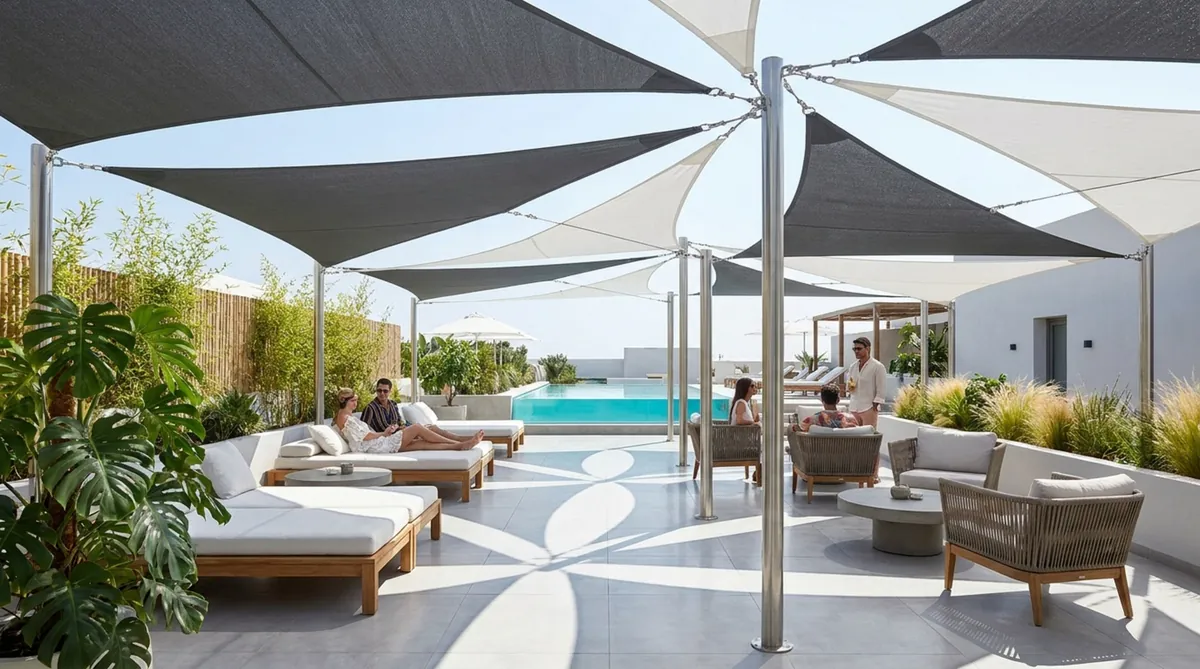
If you need to shade a massive area, the smartest approach is grouping several smaller sails together. This is highly recommended for areas exceeding a 20-meter span. Using multiple sails spreads the wind load across more anchors, drastically improving overall stability.
This approach also unlocks beautiful modern design options. You can overlap the fabrics, share structural posts to reduce clutter, and mix different shapes to create dynamic, highly effective sun protection.
Choosing the Right Size Shade Sail for Your Space
Selecting the right size requires accurate measuring and a clear plan for your hardware. The objective is to achieve excellent coverage alongside safe, secure mounting. Rushing this step can result in a setup that doesn't fit properly or flaps excessively in the breeze.
Taking your time to map out the area ensures your investment will look stunning and function perfectly for years.
Measuring Your Area and Calculating Coverage
Start by measuring your space carefully and making a scaled drawing. You can cut out scaled shapes of standard or custom sails to see how they will fit your layout. Remember: the physical space you are shading must be larger than the sail itself to accommodate the mounting hardware.
As already mentioned, allow for a hardware gap of minimum 30 cm on every side. This extra breathing room guarantees you have the leverage needed to apply proper tension and prevent sagging.
Allowances for Mounting and Fixing Points
The gap from the sail corner to its anchor point is critical. A minimum of 1 foot and a maximum of 3 feet is generally the sweet spot for tensioning accessories like turnbuckles and shackles. Too little space means the hardware won't fit, while too much space allows the wind to toss the sail around.
A great installation trick is to imagine a straight line running from the center of the sail directly through the corner ring-place your anchor along that exact line for the most efficient pull direction.
Considering Fabric Stretch and Tension
Your sail will not stay exactly the same size as it was in the box. High-quality materials stretch slightly when pulled tight over the first few weeks. Manufacturers account for this by cutting the sail so it reaches your desired dimensions once fully tensioned.
Never order a slightly smaller size trying to "guess" the stretch. Order the exact final size you want. The secret to a long-lasting, great-looking setup is to apply strong, even tension and keep it tight.
Installation Requirements for Large Shade Sails
Putting up a large cover involves more than a quick weekend DIY effort. Because wind forces can be immense, the support system must be robust. Carefully selected posts, anchors, and tensioning devices ensure the fabric behaves like a stable roof rather than a loose sheet.
Pole Height and Load Considerations
Pole strength is non-negotiable. The taller the pole, the greater the leverage and force transferred to the footing. This is why thick-walled, heavy-duty poles are standard for large spans.
Varying the heights of your poles is also highly recommended. Creating a height difference creates a 3D twist that cuts down wind flapping and significantly improves water runoff. A generous slope (around 25%) is especially critical for waterproof models to prevent rainwater from pooling.
Anchor Types: Walls, Poles, and Ground Bases
Every anchor must comfortably handle high pulling forces. When attaching to walls, ensure the masonry is structurally sound. Wall anchors usually feature galvanized steel plates fixed securely with chemical anchors.
For freestanding setups, dedicated steel or treated timber poles set deeply in concrete are best. Galvanized steel ground bases mounted on reinforced concrete are also excellent options for ensuring the structure stays grounded and secure.
Mounting Hardware and Tensioning Systems
Hardware quality directly impacts durability. Galvanized steel parts are highly recommended because they resist rust and maintain their strength in outdoor spaces. Each corner features a galvanized steel D-ring that links to the anchor via a tensioning device.
Turnbuckles, shackles, and dedicated assembly kits make applying proper tension straightforward. Avoid the temptation to bridge large gaps with long ropes or chains, as this causes dangerous shock loads during breezy conditions.
Drainage and Water Management for Larger Sails
If you opt for waterproof sun protection, drainage is absolutely essential. Rainwater can quickly pool on flat surfaces, creating heavy water pockets that stretch the fabric, overload the anchors, and create safety hazards.
Always build in a strong height variation. A minimum slope of 25% guides the water naturally to a lower edge where it can safely run off, keeping your outdoor space dry and your canopy intact.
Risks and Challenges of Oversized Shade Sails
While massive canopies look impressive, pushing beyond safe size limits without correct planning invites trouble. Wind and water forces multiply quickly on oversized surfaces, putting immense pressure on every component.
Understanding these risks highlights why thoughtful design, correct tensioning, and high-quality materials are vital.
Risks of Insufficient Tension or Poor Installation
A loose sail is a vulnerable sail. If it isn't pulled tight, it will bang and flap in the wind. This constant aggressive movement wears out the fabric prematurely, weakens the hardware, and can ultimately void warranties.
Poor installation-like using flexible poles or failing to create a slope for drainage-can lead to severe damage. Correct tensioning and rigid supports are mandatory for a safe setup.
Potential for Wind Damage and Fabric Wear
As the surface area grows, wind forces escalate. If your setup isn't designed for your local weather, extreme gusts can tear seams or bend posts. Again, it is crucial that sails are taken down during strong wind gusts to protect your investment.
Without sufficient tension and a proper 3D twist, large expanses of fabric will inevitably sag and wrinkle, ruining the modern design and making wind damage much more likely.
Best Practices for Extending Shade Sail Lifespan
Your sun protection is an investment in your home’s comfort, and basic care will help it last for years. Routine maintenance and smart weather management are simple but highly effective ways to prevent early wear and tear.
Maintenance Tips for Large Shade Sails
Keep your fabric clean to maintain its aesthetic and structural integrity. Carefully lower the sail, lay it on a smooth surface, and gently wash it using mild soap, water, and a soft brush. Rinse it thoroughly with a hose. Never use harsh chemicals or bleach, as these can strip away the UV protective properties.
Regularly inspect the galvanized steel hardware for signs of wear or weakness, and check the fabric edges for minor frays. Catching and fixing small issues early prevents them from turning into major problems.
Removal and Storage During Severe Weather
One of the easiest ways to ensure a long lifespan is to take the sail down during harsh weather. Shade sails are not designed to hold heavy snow, and they must be taken down during strong wind gusts to avoid tearing and structural stress.
When storing it away for the winter, make sure the fabric is completely clean and dry to prevent mildew. Fold it gently and store it in a well-ventilated, dry place away from extreme temperatures.
See fixing kits and accessories →
Frequently Asked Questions About Shade Sail Size
Planning your outdoor comfort often brings up specific questions. Here are clear answers to help you design a safe and practical shading solution.
What’s the largest size sail that can be installed safely?
For most residential outdoor spaces, a maximum size of around 20 m² (215 sq ft) provides the best balance of safety, easy installation, and tension control. While commercial, highly engineered structures can span up to 20 meters, residential users should stick to manageable sizes or use multiple smaller sails to cover larger areas.
Can multiple sails be combined for very large areas?
Yes, and it is usually the preferred method for expansive outdoor spaces. Using several smaller sails spreads the wind load across multiple anchor points, greatly increasing safety. It also allows for creative overlaps and dynamic, modern designs that a single flat sheet cannot achieve.
Are there custom options for irregular spaces?
Absolutely! At Shade4You, we specialize in creating bespoke solutions tailored to your unique dimensions. Whether you need an irregular triangle to fit a tight balcony or a custom multi-point design for a large patio, we can help you choose the right high-quality materials and anchor placements for perfectly effective sun protection.