+48 518 537 385
 office@shade4you.eu


How can you set up a shade sail that looks great and lasts for years without sagging or tearing? The key is accurate measuring, strong mounting points, and choosing high-quality materials.
By avoiding a few common setup errors, you can easily create a comfortable outdoor space that provides effective sun protection all season long.
1. Measuring Your Area Incorrectly
Getting your measurements wrong is a very common mistake. It is not enough to just measure the ground you want to cover. You need to measure the exact distance between your fixing points. Most importantly, you must leave room for tensioning hardware like turnbuckles.
If you order a sail that exactly matches the distance between your posts, you will have no room to tighten it. This leaves the fabric loose. Always measure from point to point, then subtract the space needed for your hardware. Being exact here helps you get a nice, tight fit.
2. Choosing the Wrong Shade Sail Size or Shape
Sails come in many shapes, but picking the wrong one can leave you with too little shade. A sail that is too small will not give you the outdoor comfort you want. One that is too big can be hard to tighten and might catch too much wind.
Shape matters, too. A standard HDPE triangle shade sail looks great and offers a modern design, but a square or rectangle might give you more shade over a large patio. Think about where the sun moves during the day when picking your shape.
Configure a shade sail made to measure →
3. Ignoring Sun Angles and Local Weather Conditions
Your sail needs to block the sun, so you must know how the sun moves across your yard. If you do not check the sun’s path, you might end up with shade in the wrong spot. Watch where the sun shines in the morning and late afternoon.
Weather is just as important. If you live in a windy area, your posts and hardware must be very strong. Preferably, you should be able to quickly dismantle your shade sail when the weather gets bad.
If you get heavy rain, your sail needs a good slope so water can run off. Planning for wind and rain ensures better durability in variable weather.
4. Selecting Inappropriate or Low-Quality Fabric
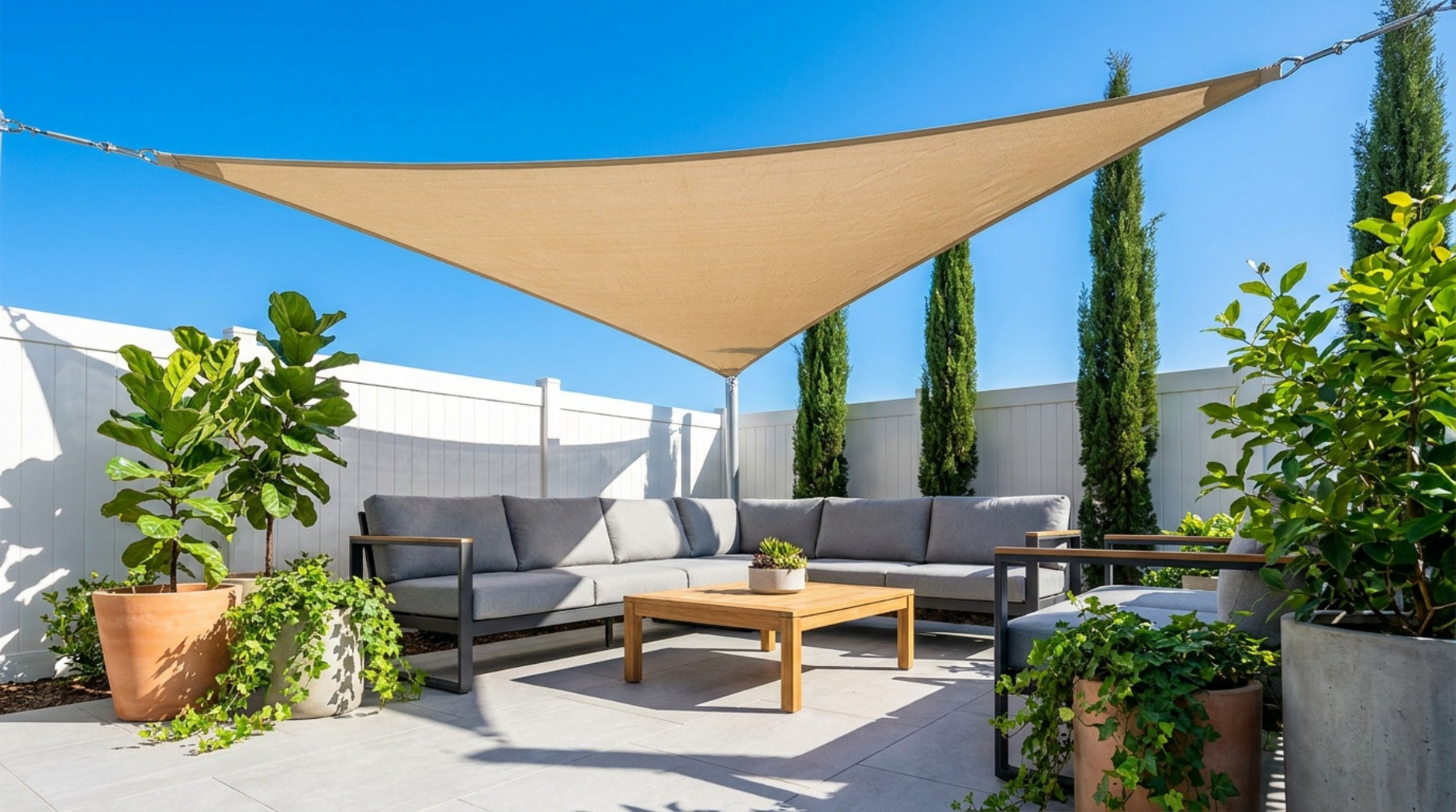
Fabric is the most important part of your setup. Cheap materials can fade, tear, and break down quickly in the sun. Investing in high-quality materials means you get better UV protection and a product that lasts much longer.
Think about what you need. Do you want airflow to keep the area cool, or do you need to stay dry? At Shade4You, we offer breathable fabrics for hot days, as well as waterproof shade sails that keep your space dry during summer rain. Knowing your needs helps you choose the best fabric.
5. Underestimating the Importance of Proper Tension
A shade sail should be pulled tight. A loose sail sags and flaps in the wind, which looks messy and can damage the fabric over time.
Sagging also creates low spots. When it rains, water collects in these dips. This water gets heavy very quickly, stretching the fabric even more. Good tension keeps the sail flat, stops flapping, and helps water run off easily.
6. Poor Mounting Point Planning and Placement
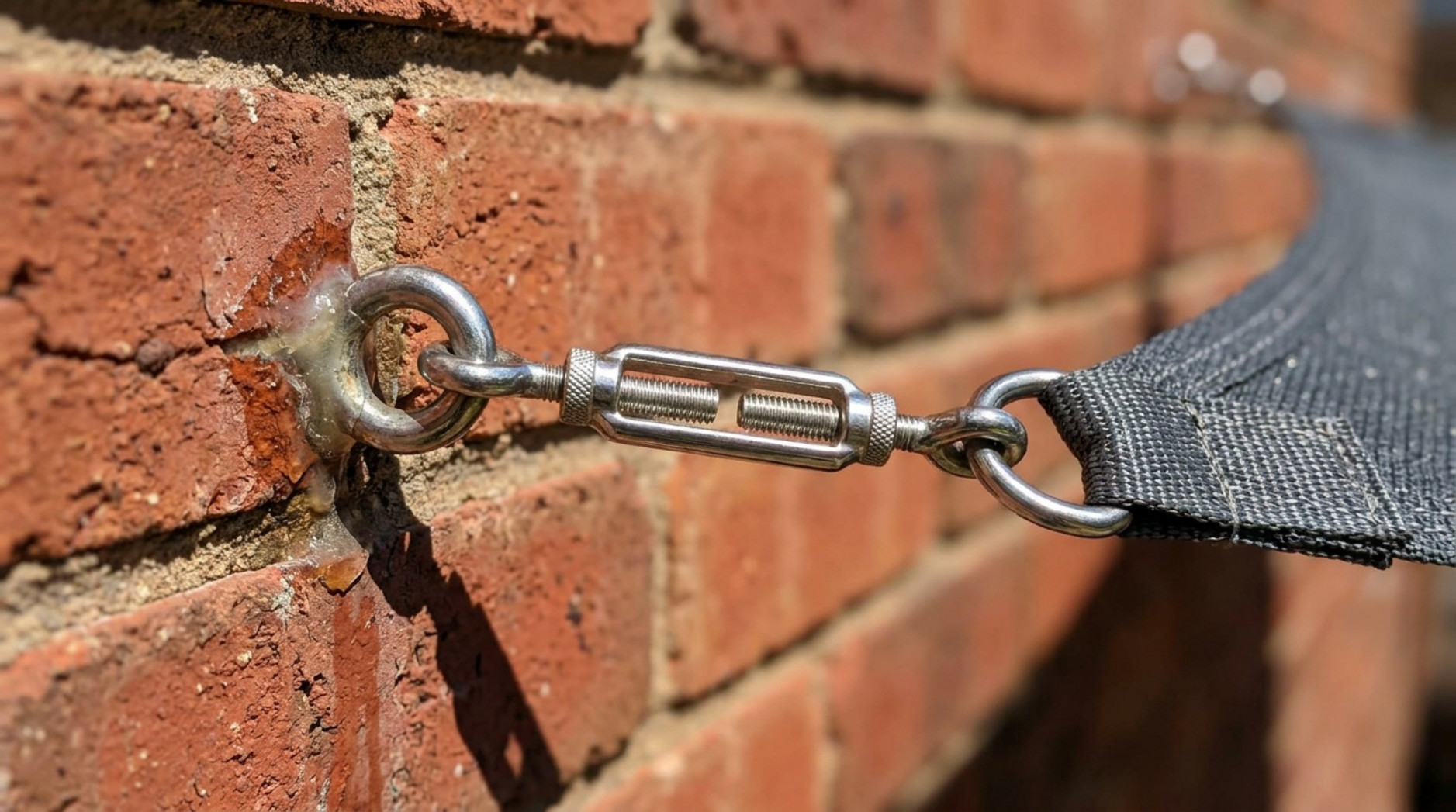
Your setup is only as strong as the points holding it up. Never attach your sail to weak spots like old tree branches, weak fences, or thin wooden boards. They often cannot handle the strong pull of a tight sail.
Always attach your fixing points to strong, solid structures. Reinforced concrete, brick walls, or thick steel posts are best. Good placement also helps you get the right slope and shape for your outdoor spaces.
7. Using Insufficient or Incorrect Hardware
Using cheap hardware is a quick way to ruin an easy installation. Basic rope or light-duty clips are not made for the strong pulling forces of a shade sail.
You should always use steel parts. This includes strong turnbuckles, shackles, and eye bolts. Good hardware will not rust or snap in bad weather, keeping your outdoor space safe and secure.
8. Skipping Regular Shade Sail Maintenance
Once your sail is up, it still needs a little care. Leaving it out all year without checking it can shorten its life. Dirt, tree sap, and strong winds take a toll over time.
Clean your sail gently to stop mould. Check your turnbuckles every few months to make sure the sail is still tight. If you expect heavy snow or wild winter storms, taking the sail down will protect it so it is ready for next spring.
Risks and Consequences of Common Shade Sail Mistakes
Making these mistakes can lead to extra costs and even safety risks. Knowing what happens when things go wrong helps you see why careful planning is so important.
Sagging, Water Pooling, and Fabric Damage
As already mentioned in the tension section, a loose sail creates serious problems. Bad measurements or poor tension lead to sagging. When water pools in a sagging sail, the weight permanently stretches the fabric. A flapping sail also rubs against itself, causing tears and worn-out edges much sooner than expected.
Safety Hazards and Structural Problems
If your mounting points are weak or your hardware is cheap, strong wind can cause them to break. A broken post or snapped bolt can send heavy parts flying, which is dangerous for people and can damage your home. Proper hardware keeps everything safely in place.
Reduced UV Protection and Lifespan
When low-quality fabric stretches out of shape, it lets more harmful sun rays through. This means you lose the effective sun protection you wanted in the first place. Good care and the right materials ensure your sail lasts for years.
How to Avoid Shade Sail Installation Errors
Good planning makes setup simple. Follow these straightforward steps to get a strong, safe, and beautiful result.
Tips for Accurate Measuring and Sizing
Always use a tape measure and write your numbers down. Measure between your strong fixing points, then reduce that number by about 30 cm. This gives you the perfect amount of space for your turnbuckles. If you need something specific, you can always look into custom shade sails tailored exactly to your space.
Drawing a quick sketch of your yard can also help you see exactly where the shade will fall at different times of the day.
Planning for Wind, Rain, and Sun Path in Your Area
Watch the sun in the morning and afternoon so you can angle your sail to block the hottest rays. If you use a waterproof fabric, make sure you set it up with a slope of 20 to 30 degrees. This tilt ensures the rain runs off quickly without pooling.
Selecting the Right Materials
Do not cut corners on materials. Choose weather-resistant outdoor fabrics with a high UV rating. If you are ever unsure what you need, the Shade4You team is happy to help you find the right outdoor accessories for your home or business.
Best Practices for Tensioning and Shaping
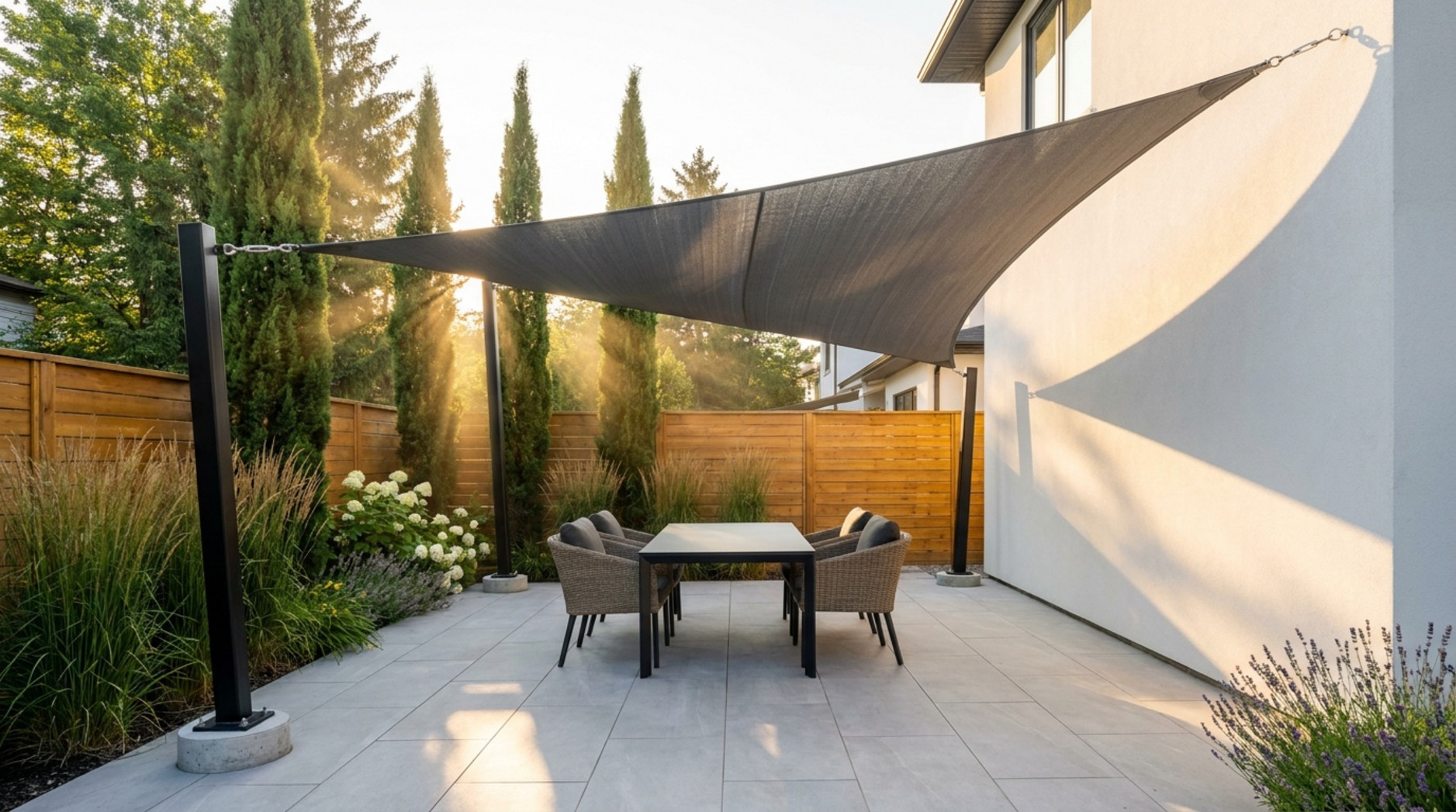
To get that neat, modern design, use turnbuckles. Connect all the corners loosely by hand first. Then, slowly tighten each corner a little bit at a time. This keeps the tension even across the whole fabric.
For the best look and drainage, try making one corner lower than the others. This twist looks fantastic and helps the sail handle windy days much better.
Take your time, and you will have a perfect, shaded outdoor space to enjoy.