+48 518 537 385
 office@shade4you.eu


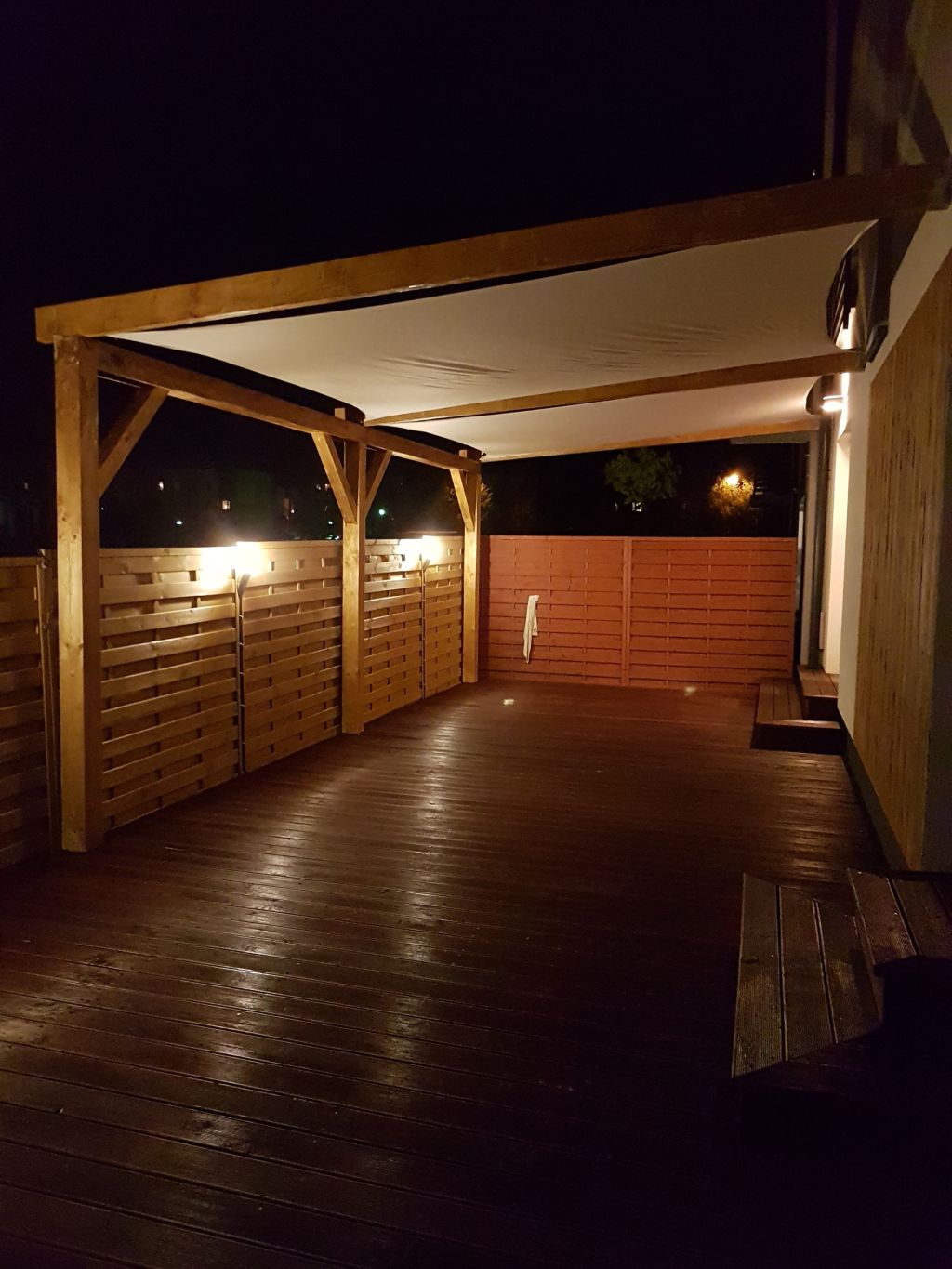
Will Water Accumulate on a Shade Sail?
Water behaviour on a shade sail depends primarily on the material structure.
Breathable fabrics allow rainwater to pass through the material, while waterproof fabrics collect water on the surface and therefore require correct slope and tension.
Understanding the difference between shade sail fabrics is essential for choosing the right solution for a terrace or pergola.
HDPE Shade Sails – Breathable Fabric
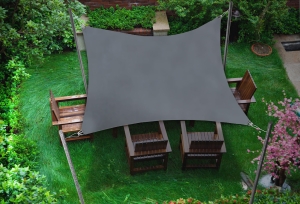
HDPE (High Density Polyethylene) fabric is a breathable mesh material designed for sun protection and air circulation.
Its structure allows:
-
airflow through the sail
-
heat reduction under the shaded area
-
rainwater to pass through the fabric
Because of this permeability, HDPE shade sails do not accumulate water. Rainwater simply flows through the material.
However, during extremely intense rainfall – which may occasionally occur in the UK during summer storms – the volume of water may temporarily exceed the drainage capacity of the fabric.
Mesh Shade Sails – Light and Airy Shade
Mesh fabrics behave similarly to HDPE materials.
They are:
-
lightweight
-
breathable
-
partially transparent
Rainwater passes through the mesh structure instead of collecting on the surface. This makes mesh sails a practical solution where airflow and visibility are important.
Mesh sails provide shade while still allowing light and air circulation.
Premium Decor – Waterproof Shade Sail Fabric
Premium Decor is a waterproof outdoor fabric used for shade sails that also provide rain protection.
Unlike HDPE or mesh materials, Decor fabric does not allow water to pass through.
For this reason, waterproof shade sails must be installed with:
-
sufficient slope
-
proper tension
-
strong mounting points
Without correct geometry, water may collect on the fabric surface.
Waterproof models can be found here:
waterproof shade sails
PVC 650 g/m² – Heavy Duty Waterproof Fabric
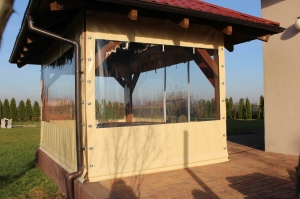
PVC 650 g/m² is a high-strength waterproof fabric used in demanding outdoor installations.
This material is:
-
fully waterproof
-
extremely durable
-
resistant to mechanical stress
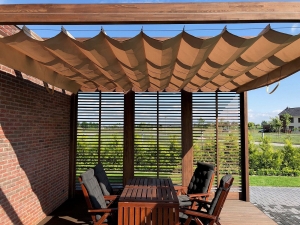
PVC fabrics are often used in Roman blinds and pergola shading systems, where controlled water drainage is required.
Because PVC is completely impermeable, correct installation slope is essential.
PVC Waterproof models can be found here:
INDUSTRIAL Sun Shade Sail MADE TO MEASURE
What Happens During Heavy Rain?
In the UK, intense rainfall can occasionally occur during summer storms.
With breathable fabrics such as HDPE or mesh, rainwater passes through the sail and does not accumulate.
With waterproof fabrics such as Decor or PVC, water must drain off the surface. For this reason, correct tilt and tension of the sail are essential.
Should Shade Sails Be Removed During Storms?
Heavy rain in the UK is often accompanied by strong wind.
For safety reasons it is recommended to remove shade sails during storms, especially when wind loads become significant.
This helps protect both the sail and the mounting structure.
Summary
Water accumulation on a shade sail depends mainly on the fabric type.
Breathable materials such as HDPE and mesh allow rainwater to pass through, preventing water accumulation. Waterproof materials such as Premium Decor and PVC fabrics block water, which means the sail must be installed with proper slope to allow drainage.
Choosing the correct material is therefore essential for reliable shade and rain protection in UK weather conditions.
FAQ
Are all shade sails waterproof?
No. HDPE and mesh sails are breathable and allow rainwater to pass through.
Which shade sail fabric is waterproof?
Premium Decor and PVC fabrics are waterproof.
Can water accumulate on breathable shade sails?
Normally no. Rainwater passes through the fabric.
Do waterproof shade sails need slope?
Yes. Waterproof sails must be installed with sufficient slope for proper drainage.
Total reviews: 14 reviews