+48 518 537 385
 office@shade4you.eu


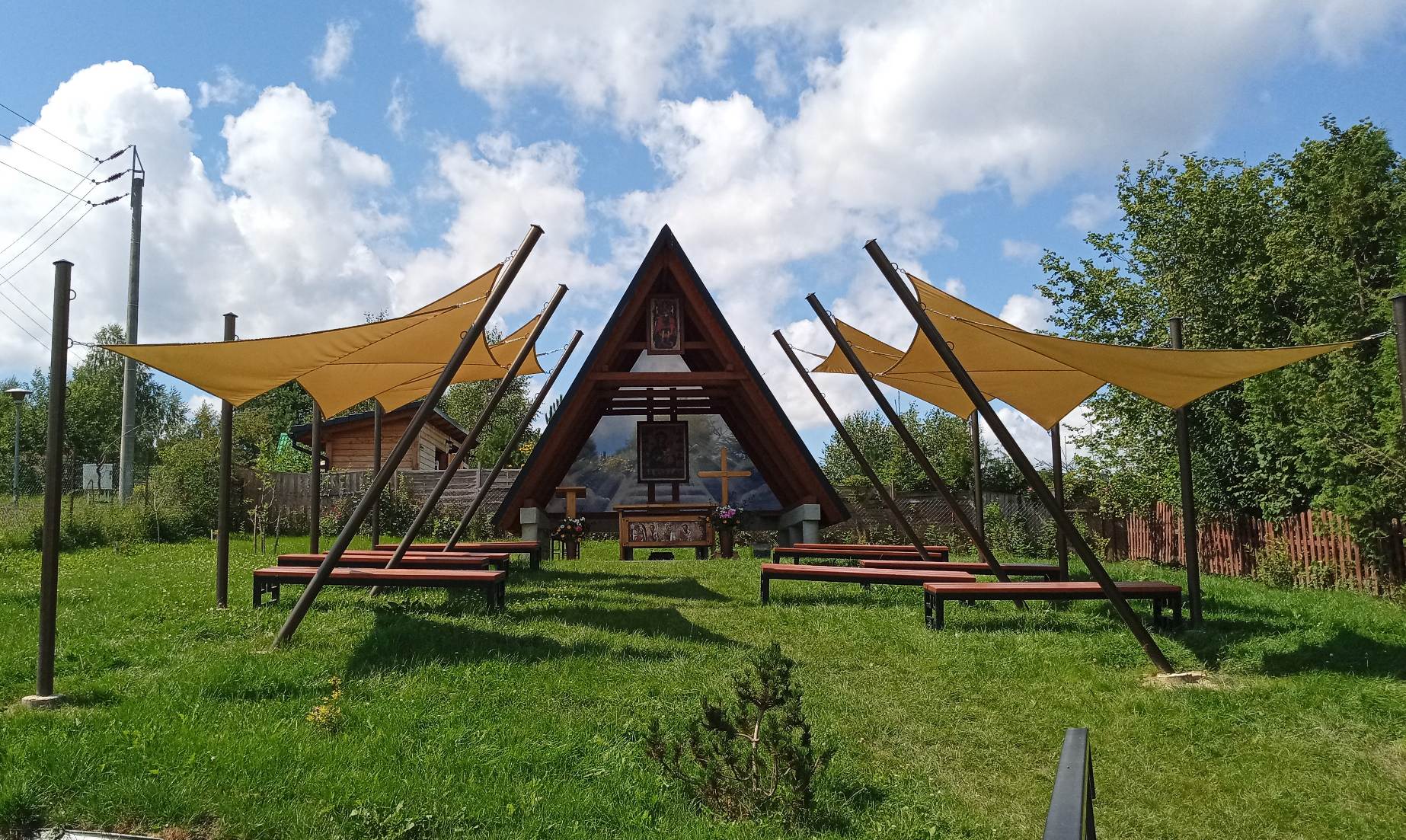
How to secure sun sails against wind?
Quick answer:
To secure sun sails against wind, use solid mounting points, maintain proper tension and slope, and apply professional reinforcements such as steel cable integrated into the sail edges. High-quality UV-resistant threads and tested outdoor materials are essential for durability. In strong winds, retract or remove the sail.
Introduction
Sun sails are an effective way to create shade and improve outdoor comfort on terraces and in gardens. However, wind is one of the most critical factors affecting their durability and safe use.
Incorrect installation or poor-quality finishing can lead to excessive stress, fabric deformation or failure at mounting points. In UK conditions, where wind can change rapidly, proper securing of the sail is essential.
This guide explains how to protect sun sails from wind, what technical solutions increase resistance and what to pay attention to during installation.
Why is wind a critical factor for sun sails?
Sun sails are flexible structures, which means they respond dynamically to wind forces.
Typical risks include:
- fabric movement and flapping
- concentrated stress at fixing points
- deformation over time
- gradual weakening of the material
Waterproof sails are especially exposed, as they do not allow airflow and create higher wind resistance.
How should a sun sail be installed to resist wind?
Solid mounting points
The entire system depends on the strength of mounting elements.
Recommended solutions:
- concrete or brick walls
- steel or aluminium posts
- structural beams
Avoid weak elements such as lightweight fences or unstable railings.
Proper tension
Correct tension is essential for stability.
A properly tensioned sail:
- reduces flapping
- distributes forces evenly
- maintains its shape
Each corner should be tensioned individually using adjustable hardware such as turnbuckles.
Correct slope
A sun sail should never be installed flat.
Best practice:
- minimum height difference of 20–30 cm between fixing points
- improves wind flow
- reduces pressure on the surface
What reinforcements increase wind resistance?
Reinforced edges with integrated steel cable
A key professional solution is a steel cable integrated into a tunnel along the entire edge of the sail.
How it works:
- the cable absorbs part of the load
- forces are distributed evenly along the perimeter
- reduces stretching of the fabric
Benefits:
- significantly higher wind resistance
- improved structural stability
- longer product lifespan
This solution is particularly effective for larger sails and wind-exposed areas.
High-quality UV-resistant threads
An often overlooked but critical factor is the quality of stitching.
Professional sun sails use:
- UV-resistant threads
- threads resistant to moisture and external conditions
- tested stitching solutions designed for outdoor use
This prevents seam degradation, which is one of the most common failure points in lower-quality products.
Professional mounting hardware
Use dedicated accessories such as:
- stainless steel turnbuckles
- carabiners
- wall brackets and eye bolts
They allow precise adjustment and improve safety under load.
When should you retract or remove a sun sail?
Even well-installed sails have limits.
You should remove or retract the sail when:
- strong winds are forecast
- storms or gusts are expected
- excessive movement is visible
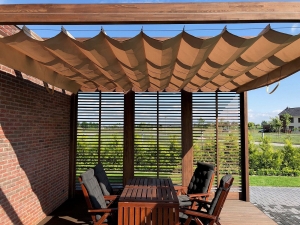
Retractable systems (e.g. sliding sails or horizontal Roman blinds) make this process easier.
Practical section – step-by-step securing
Checklist
- install on solid structures
- ensure proper slope
- tension all corners evenly
- use professional mounting hardware
- consider steel cable reinforcement
Common mistakes
- loose installation
- no slope
- weak mounting points
- ignoring wind exposure
- lack of edge reinforcement
Expert perspective – what determines durability?
From a manufacturer’s point of view, durability is defined by system quality.
1. Material performance
Outdoor fabrics must be tested and proven in real conditions.
2. Stitching technology
UV-resistant threads significantly increase lifespan and reliability.
3. Edge construction
Steel cable integration improves load distribution and reduces stress.
4. Installation geometry
Correct angles and tension reduce long-term wear.
At Shade4You, we use Premium Outdoor Materials and tested, proven solutions, combined with Individual Technical Consulting to ensure each installation performs reliably in real conditions.
Summary
Securing sun sails against wind requires proper installation, professional finishing and the right technical solutions. Solid mounting points, correct tension and slope are essential.
Additional reinforcements such as steel cable integrated into the sail edges and UV-resistant threads significantly increase durability and safety.
In strong wind conditions, retracting or removing the sail remains the safest option.
FAQ
Can sun sails withstand strong wind?
Yes, if properly installed and reinforced. In extreme conditions, they should be removed.
What improves wind resistance the most?
Proper tension, solid mounting and steel cable reinforcement.
Do stitching materials matter?
Yes. UV-resistant threads are critical for long-term durability.
When should I remove my sun sail?
When strong winds or storms are expected.
Total reviews: 14 reviews