+48 518 537 385
 office@shade4you.eu


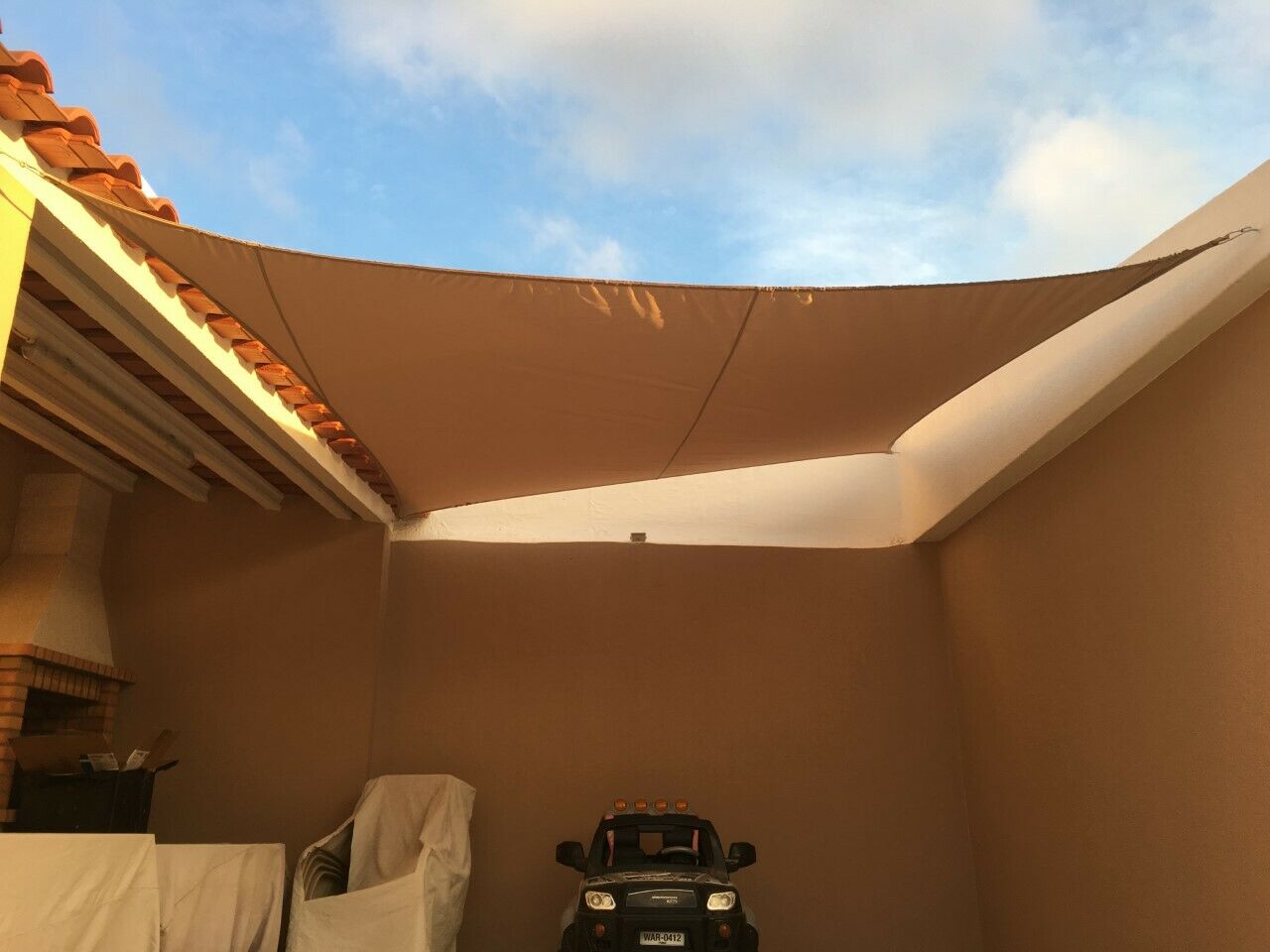
Shade sails are designed as tensioned membrane structures that distribute forces across the fabric and transfer loads to the mounting points. Because of this structural behaviour, the size of the sail has a direct impact on its stability and durability.
Many people assume that increasing the sail size simply provides more shade. In reality, larger sails generate significantly higher loads on both the fabric and the supporting structure.
Understanding the technical limits of shade sail dimensions helps ensure that the installation remains safe, stable and visually balanced.
Typical Maximum Size of a Shade Sail
For most residential installations, shade sails work best within a certain size range.
In general, a maximum area of around 20 m² is recommended for standard installations.
Typical examples include:
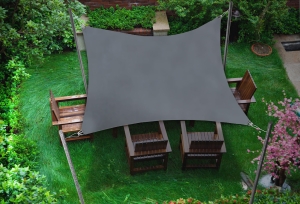
• square sails up to approximately 4.5 × 4.5 m
• rectangular sails with sides up to around 7 m
• triangular sails with slightly larger spans depending on geometry
Within this range, the sail can usually maintain proper tension and structural stability.
Larger sails may still be possible but often require reinforced mounting structures and professional assessment.
Why Size Matters in Shade Sail Design
Shade sails function differently from rigid structures. The fabric must remain under constant tension in order to transfer loads efficiently to the corners.
When the sail becomes larger, several technical challenges appear.
Increased wind load
The larger the surface area, the more wind force acts on the sail.
Wind pressure increases exponentially with surface size, meaning that even moderate winds can generate significant forces on large sails.
Higher tension forces
To maintain a stable shape, larger sails require higher tension in the corners.
This increases the load on:
• mounting brackets
• posts
• wall anchors
• tensioning hardware
If the supporting structure is not strong enough, the sail may lose tension or the mounting points may move under load.
Fabric deformation
As sail size increases, the fabric becomes more susceptible to deformation.
This can lead to:
• sagging in the centre
• uneven tension
• wrinkles along the diagonals
Proper design helps minimise these issues but cannot eliminate them entirely when sails become very large.
Maximum Span Between Mounting Points
Another important limitation is the distance between mounting points.
In most shade sail installations, the effective span between corners should remain within 6 to 8 metres.
This range allows tensioning hardware such as turnbuckles to maintain proper fabric tension.
If the span becomes larger:
• the sail may become difficult to tension
• the centre may sag
• wind loads increase significantly
For larger spans, additional support points or multiple sails may be a better solution.
Large Shade Sails – When Are They Possible?
Large shade sails can still be used in some situations, but they require careful planning.
Factors that influence the feasibility include:
• strength of the supporting posts
• wall construction and anchor type
• wind conditions at the location
• fabric type and reinforcement
• correct concave cutting of the sail edges
In professional installations, engineers may calculate wind loads and structural forces to determine the safe sail size.
Practical Installation Recommendations
When planning a shade sail installation, the following guidelines help achieve a stable result.
Checklist:
• keep sail area close to or below 20 m² when possible
• ensure strong mounting structures
• maintain proper distance between mounting points
• allow sufficient tensioning distance for hardware
• install mounting points at different heights for water drainage
These factors significantly influence the performance of the sail.
Expert Perspective – Manufacturer Guidelines
From a manufacturing perspective, the relationship between sail size, fabric tension and structural loads is critical.
Even high-quality materials cannot compensate for weak mounting structures or excessive spans.
For most installations, several smaller sails often provide a better solution than a single very large sail. This approach distributes loads more evenly and improves wind resistance.
Proper planning ensures that the shade sail remains both functional and visually attractive.
Summary
The maximum size of a shade sail depends on material strength, mounting structure and wind exposure.
For most installations, a sail area of around 20 m² and side lengths up to 7 metres provide the best balance between stability and performance.
Larger sails are technically possible but require stronger support structures and careful planning to ensure safe operation.
Total reviews: 15 reviews