+48 518 537 385
 office@shade4you.eu


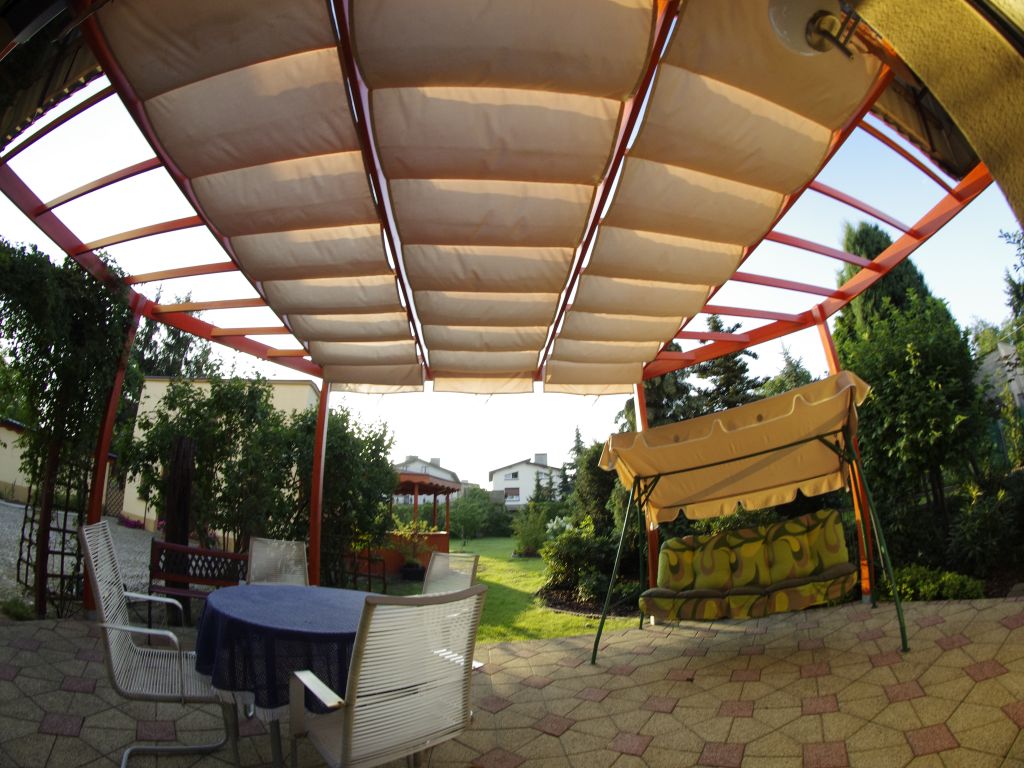
Why the Tilt of a Shade System Matters
Outdoor shading systems are not rigid roofs. They function as tensioned fabric structures, which means that geometry and slope are essential for correct performance.
A proper tilt helps to:
-
ensure effective rainwater drainage
-
prevent water accumulation in waterproof fabrics
-
improve structural stability
-
maintain consistent shading during the day
Without sufficient slope, water may collect on the fabric surface and increase the load on mounting points.
For waterproof installations, see:
waterproof shade sails
Recommended Tilt Direction for Sun Sails
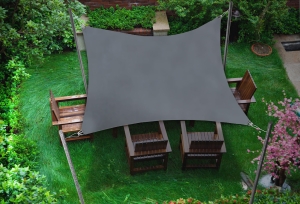
In most cases, sun sails should be tilted towards the west.
This orientation helps maintain stable shade in the afternoon when solar radiation is strongest. If the sail is tilted incorrectly, sunlight may begin to enter beneath the sail as the sun lowers during the day.
The correct tilt improves both shading efficiency and comfort on the terrace.
Custom systems can be ordered as
made-to-measure shade sails
Alternative Tilt Towards the East
In some installations it may also be practical to tilt the sail towards the east.
This solution can work well when prevailing winds typically come from the west. During rainfall, wind blowing across the sail surface may help remove water from the fabric more efficiently.
However, the final orientation should always consider:
-
local wind direction
-
pergola orientation
-
nearby buildings or walls
Sun Sails Mounted Near a Building Wall
When a sun sail is mounted against a building wall, it should always slope away from the building.
The higher mounting points should be located on the wall side, while the lower points should face the garden or terrace.
This prevents rainwater from draining onto the building façade and protects both the wall and mounting hardware.
Correct Tilt for Roman Blinds
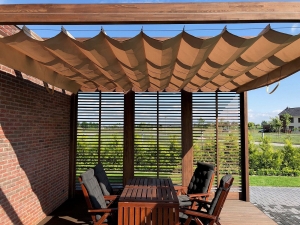
Roman blinds installed horizontally in pergolas also require a controlled slope.
If the blind slides directly along a building wall, it should slope from the house towards the garden so rainwater drains away from the building.
If the blind extends outward from the wall towards the garden, the slope should usually be directed to one side to allow water to flow away from the centre of the terrace.
Roman blinds are commonly installed in pergola systems together with pergola shade systems
Installing Multiple Roman Blinds
When installing two Roman blinds next to each other, they should generally be tilted slightly outward.
This prevents rainwater from draining into the centre of the terrace.
Special attention is required when installing three Roman blinds side by side.
If all systems are installed at the same height, rainwater may flow towards the middle of the terrace.
Practical Solution for Multiple Systems
To avoid water accumulation when three Roman blinds are installed next to each other, the systems can be mounted at different heights.
The recommended difference should be at least 25 cm.
This allows rainwater to drain properly and improves overall system performance.
In many installations it may also be useful to review the sliding direction or dimensions of each system to achieve a more practical layout.
Summary
Sun sails, Roman blinds and retractable shade sails must always be installed with a controlled tilt.
A proper slope improves rainwater drainage, reduces structural stress and ensures consistent shading during the day.
Sun sails are usually tilted towards the west, while systems mounted against a building should slope away from the wall. Roman blinds should be installed so water drains towards the garden or to the outer sides of the terrace.
When multiple shading systems are installed next to each other, differences in height may be necessary to ensure effective drainage.
FAQ
What is the best tilt for a sun sail?
Sun sails are typically tilted towards the west to maintain consistent shade during the afternoon.
Should a sun sail slope towards the house?
No. A sun sail mounted near a wall should always slope away from the building.
Do Roman blinds need a slope?
Yes. A slight tilt is necessary to allow rainwater to drain correctly.
What happens if several Roman blinds are installed at the same height?
Water may accumulate in the centre of the terrace. Installing systems at slightly different heights can prevent this.
Total reviews: 13 reviews