+48 518 537 385
 office@shade4you.eu


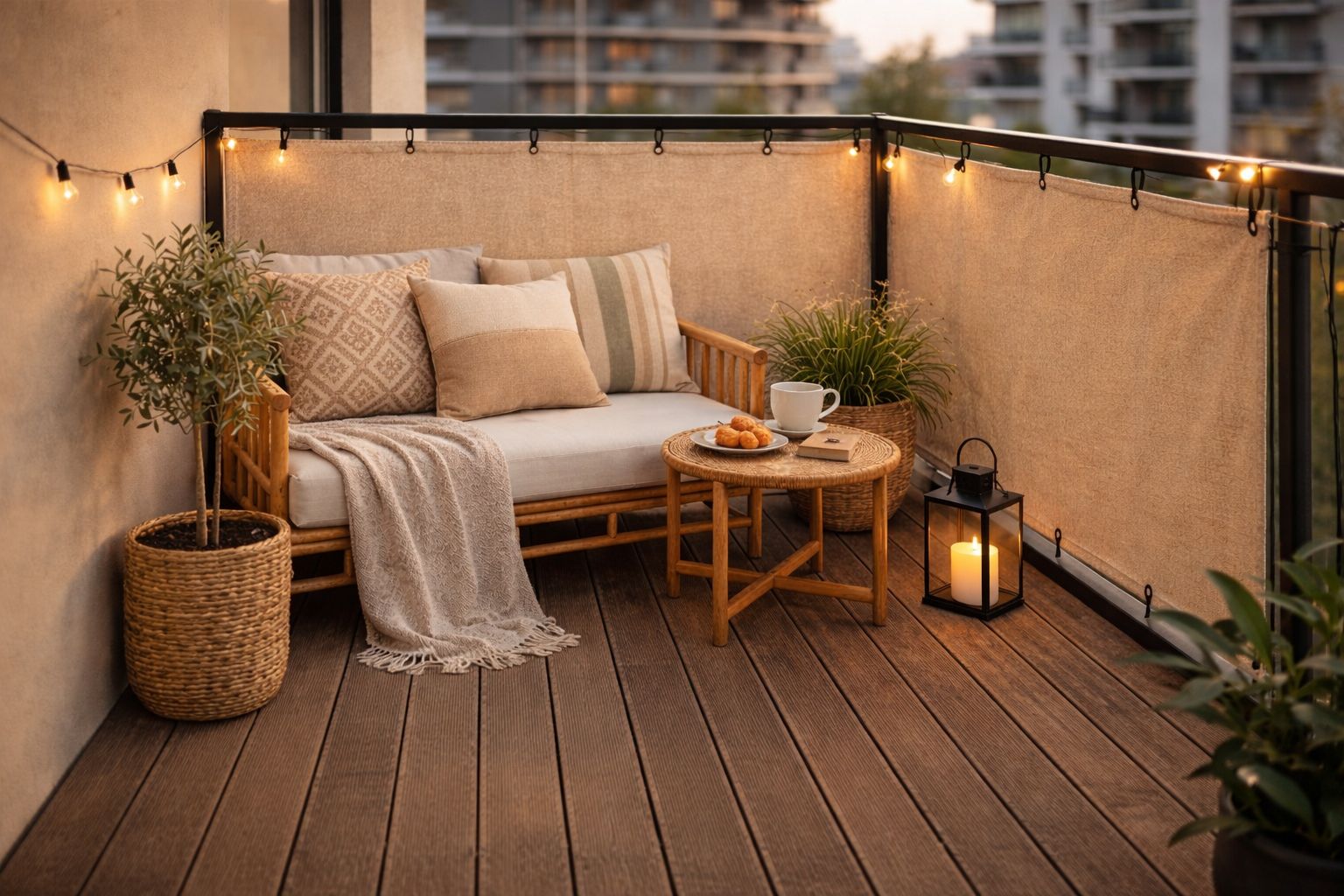
Balconies are often the only private outdoor space available in urban homes and apartments. In cities across the UK, balconies serve as small relaxation areas where people enjoy morning coffee, grow plants or spend time outdoors.
However, many balconies lack privacy. Neighbouring buildings, nearby balconies and street visibility can make the space feel exposed and uncomfortable.
A balcony privacy screen is one of the simplest and most effective solutions. It improves privacy, reduces wind exposure and can also enhance the visual appearance of your balcony.
Choosing the right balcony screen, however, requires understanding the different materials, levels of protection and design options available. In this guide we explain how to choose the best balcony privacy screen for your space.
Why Install a Balcony Privacy Screen?
Balcony screens serve several practical purposes beyond simple privacy.
Improved privacy
The main function of a balcony screen is to block direct views from neighbouring buildings or nearby balconies.
Wind protection
Balconies located on higher floors can be exposed to strong winds. A screen helps reduce wind intensity and makes the space more comfortable.
Sun shading
Depending on the fabric used, balcony screens can provide partial shade and reduce glare from direct sunlight.
Better balcony design
Modern balcony screens are also a decorative element. They can transform a simple railing into a visually appealing outdoor feature.
Types of Balcony Privacy Screens
Balcony covers are available in several types depending on their material and intended use.
Common options include:
Each option provides a different balance between privacy, airflow and weather resistance.
Which Material Is Best for a Balcony Privacy Screen?
The material is the most important factor when choosing a balcony privacy screen.
Different fabrics provide different levels of privacy, durability and wind resistance.
Waterproof Decor Fabric
Decor fabric is a coated outdoor textile designed for balconies exposed to changing weather conditions.
Key advantages include:
-
protection from light rain
-
good UV resistance
-
dense structure for improved privacy
-
elegant textile appearance
Decor screens are often chosen for balconies where both privacy and weather protection are important.
HDPE Balcony Screens
HDPE (High Density Polyethylene) is a technical outdoor fabric designed for sun shading.
Advantages include:
-
breathable structure
-
up to 95% sun shading
-
good durability in outdoor conditions
-
reduced wind pressure
Because the fabric is permeable, air and rain can pass through it. This makes HDPE particularly suitable for high balconies or windy locations.
Economy Balcony Screens
Economy screens are made from lightweight outdoor fabric designed primarily for visual privacy.
Benefits include:
-
affordable solution
-
simple installation
-
lightweight material
-
effective basic privacy
This option is popular when the main goal is to cover balcony railings quickly and economically.
Printed Balcony Privacy Screens
Digitally printed balcony screens offer a decorative alternative to standard fabrics.
These screens combine privacy with design by printing decorative patterns directly onto the fabric.
Popular print options include:
-
wood textures
-
nature and plant motifs
-
decorative graphics
-
urban landscape patterns
Digital printing allows homeowners to transform their balcony railing into an attractive visual element while still maintaining privacy.
Balcony Privacy Screen Ideas for Small Apartments
Small balconies require smart design solutions.
A privacy screen can help transform even a compact balcony into a comfortable outdoor space.
Useful ideas include:
Decorative printed screens
Printed balcony covers add character and visual depth to small spaces.
Light-coloured fabrics
Bright colours make the balcony appear larger and more open.
Partial screens
In some cases covering only one or two sides of the railing is enough to create privacy while keeping the space airy.
Combining screens with plants
Balcony plants combined with privacy screens can create a more natural and relaxing environment.
Practical Tips: How to Choose the Right Balcony Screen
Before ordering a balcony privacy screen, consider several practical factors.
Measure the balcony railing
Accurate measurements ensure the screen fits perfectly.
Consider wind exposure
Breathable fabrics such as HDPE often work better on higher floors.
Choose durable outdoor materials
Balcony covers should be resistant to UV radiation and weather conditions.
Decide on the level of privacy
Dense fabrics provide stronger visual protection, while breathable materials allow more airflow.
Expert Insight from a Manufacturer
From a manufacturer’s perspective, durability and finishing quality are crucial for balcony screens.
Important features include:
-
strong outdoor fabrics
-
reinforced edges
-
UV resistant materials
-
precise production dimensions
At Shade4You, balcony privacy screens are produced using outdoor fabrics designed specifically for balcony railings and terrace structures.
Custom-made production ensures that each screen fits the balcony perfectly and remains durable over time.
Summary
A balcony privacy screen can significantly improve the comfort of a balcony by increasing privacy, reducing wind exposure and enhancing the visual appearance of the space.
Materials such as Decor waterproof fabric, HDPE breathable fabric, economy balcony fabrics and digitally printed screens allow homeowners to choose a solution tailored to their needs.
By selecting the right material and ensuring proper dimensions, even a small balcony can become a comfortable and attractive outdoor space.
You can explore available options here:
https://shade4you.eu/en_GB/c/BALCONY-PRIVACY-SCREENS/93
FAQ
What is the best balcony privacy screen?
The best balcony screen depends on your needs. Decor fabric offers privacy and light rain protection, while HDPE provides breathable shading.
Are balcony privacy screens waterproof?
Some materials, such as Decor waterproof fabric, protect against light rain. Breathable fabrics like HDPE allow rainwater to pass through.
How do you attach a balcony privacy screen?
Most screens are mounted to balcony railings using cords, clips or cable ties.
Do balcony screens protect against wind?
Yes. Balcony screens can significantly reduce wind exposure depending on the fabric density.
Total reviews: 36 reviews