+48 518 537 385
 office@shade4you.eu


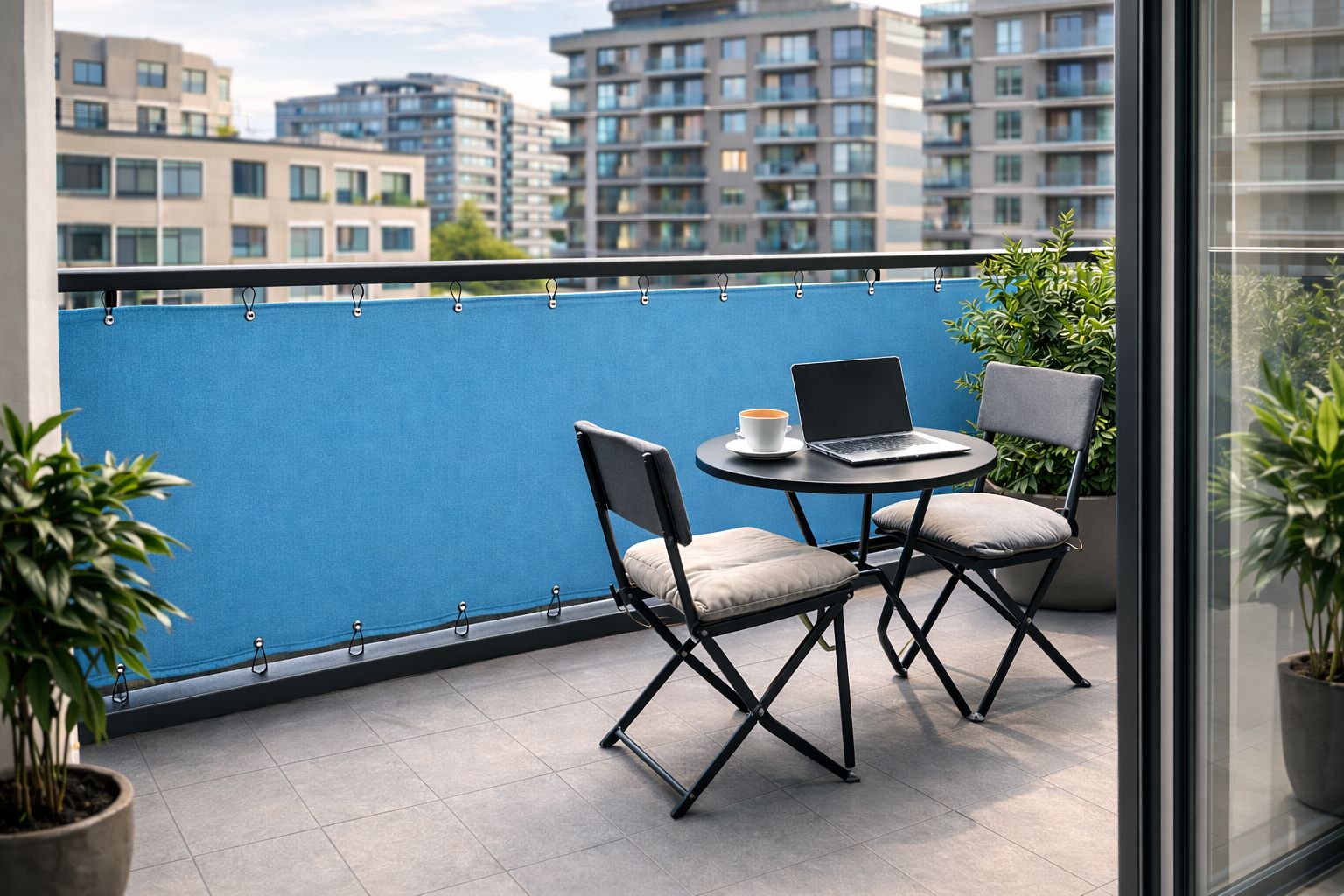
Balcony privacy screen – how to choose the right material for your balcony?
Quick answer:
The best balcony privacy screen depends on your needs: HDPE and Mesh provide airflow and reduce wind pressure, while printed balcony screens combine privacy with design. A custom-made solution ensures a perfect fit, better durability and a cleaner finish.
Introduction
Balconies in the UK are often exposed to neighbours, wind and changing weather conditions. While they offer valuable outdoor space, they rarely provide comfort or privacy without additional protection.
A balcony privacy screen is one of the simplest ways to improve usability. It creates a more private environment, protects against wind and enhances the overall appearance of the space.
However, choosing the right solution is not just about appearance. The type of material, level of airflow, and installation method all affect how the screen performs in everyday use.
In this guide, we explain how to choose the right balcony screen, what materials work best, and what to consider before buying.
Why install a balcony privacy screen?
A balcony without screening is often underused—especially in dense urban areas.
The main benefits include:
- Privacy from neighbours and passers-by
- Wind reduction, especially on higher floors
- Sun shading, depending on material density
- Improved aesthetics – a more finished and comfortable space
In UK conditions, where wind and moisture are common, a well-chosen screen significantly improves everyday comfort.
What materials are best for balcony screens?
The material determines how the screen behaves in wind, sunlight and daily use.
Breathable materials (HDPE)
HDPE is one of the most widely used materials for balcony privacy screens.
Key features:
- Allows air to pass through
- Reduces wind pressure on railings
- Provides approx. 80–95% shading
- Does not retain moisture
Best for:
- Windy balconies
- High-rise buildings
- Users who want privacy without blocking airflow
Technical fabrics (Mesh 270 g/m²)
Mesh is a more open, technical fabric often used where airflow is critical.
Key features:
- Higher permeability than HDPE
- Good visibility reduction without full blackout
- Strong and dimensionally stable
- Suitable for demanding conditions
Best for:
- Very windy locations
- Functional, technical applications
- Users prioritising durability and airflow
Printed balcony screens (custom print solutions)
Printed balcony screens combine functionality with design.
Key features:
- High level of privacy (depending on print density)
- Decorative function – patterns, textures or custom graphics
- UV-resistant printing technology
- Available in various styles (including children’s designs or modern patterns)
Best for:
- Design-focused balconies
- Families and personalised spaces
- Residential and commercial use
Can a printed balcony screen provide both privacy and design?
Yes—and this is one of the fastest-growing trends in balcony design.
A printed balcony screen allows you to:
- block visibility from outside
- create a visually attractive space
- match your balcony to the building style or personal preferences
Unlike plain materials, printed options can visually transform even a small balcony into a more inviting and personalised environment.
Why is a custom-made balcony screen important?
Many ready-made screens do not fit properly, which leads to practical issues.
Common problems:
- loose or uneven installation
- fabric sagging
- faster wear at fixing points
Custom Made Production ensures:
- precise fit to your balcony dimensions
- even tension across the surface
- better durability and aesthetics
For UK customers, where balcony sizes and railings vary widely, this is a key factor.
Practical section – how to choose the right balcony screen
Checklist before buying
- Measure width and height accurately
- Check wind exposure (low / medium / high)
- Decide between airflow (HDPE, Mesh) or visual effect (print)
- Identify fixing points (railings, walls)
- Choose colour or pattern matching your space
Installation tips
- Use evenly spaced fixing points (every 30–50 cm)
- Avoid over-tightening the material
- Ensure proper tension to prevent sagging
- Use reinforced eyelets for durability
Common mistakes
- Choosing solid-looking materials for very windy areas
- Ignoring airflow requirements
- Buying standard sizes instead of custom fit
- Focusing only on appearance, not functionality
Expert perspective – what defines a high-quality balcony screen?
From a manufacturer’s point of view, durability and performance depend on several technical factors.
1. Material quality
Premium outdoor materials are UV-stabilised and resistant to moisture and temperature changes.
2. Finishing details
Reinforced edges and properly spaced eyelets significantly increase lifespan.
3. Production precision
A made-to-measure screen distributes tension evenly and avoids weak points.
4. Real-world testing
Materials like HDPE and Mesh are selected specifically for outdoor conditions, not indoor use.
At Shade4You, we combine European Manufacturing with Individual Technical Consulting, helping customers select solutions tailored to their balcony and local conditions.
Summary
A balcony privacy screen improves comfort, privacy and usability of your outdoor space. The right choice depends on whether you prioritise airflow (HDPE, Mesh) or design and visual impact (printed screens).
For UK conditions, durability, proper installation and a custom-made fit are essential. A well-selected screen can turn even a small balcony into a functional and comfortable extension of your home.
FAQ
What is the best material for a balcony privacy screen?
HDPE is the most versatile option. Mesh works best in very windy areas, while printed screens are ideal for design and privacy.
Are balcony screens wind-resistant?
Yes, especially breathable materials like HDPE and Mesh, which reduce wind pressure.
Do printed balcony screens fade over time?
High-quality prints are UV-resistant and designed for long-term outdoor use.
Should I choose a custom-size balcony screen?
Yes. A custom fit ensures better durability, appearance and easier installation.
Total reviews: 16 reviews