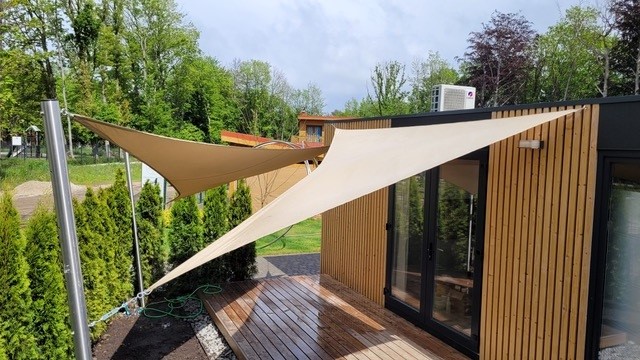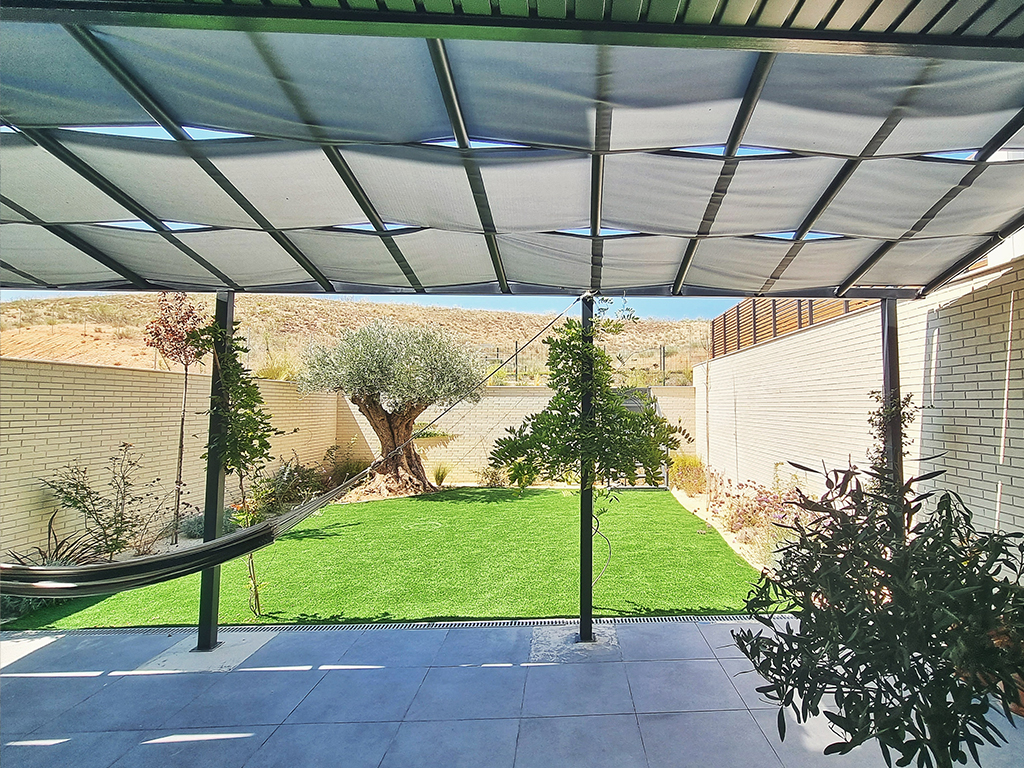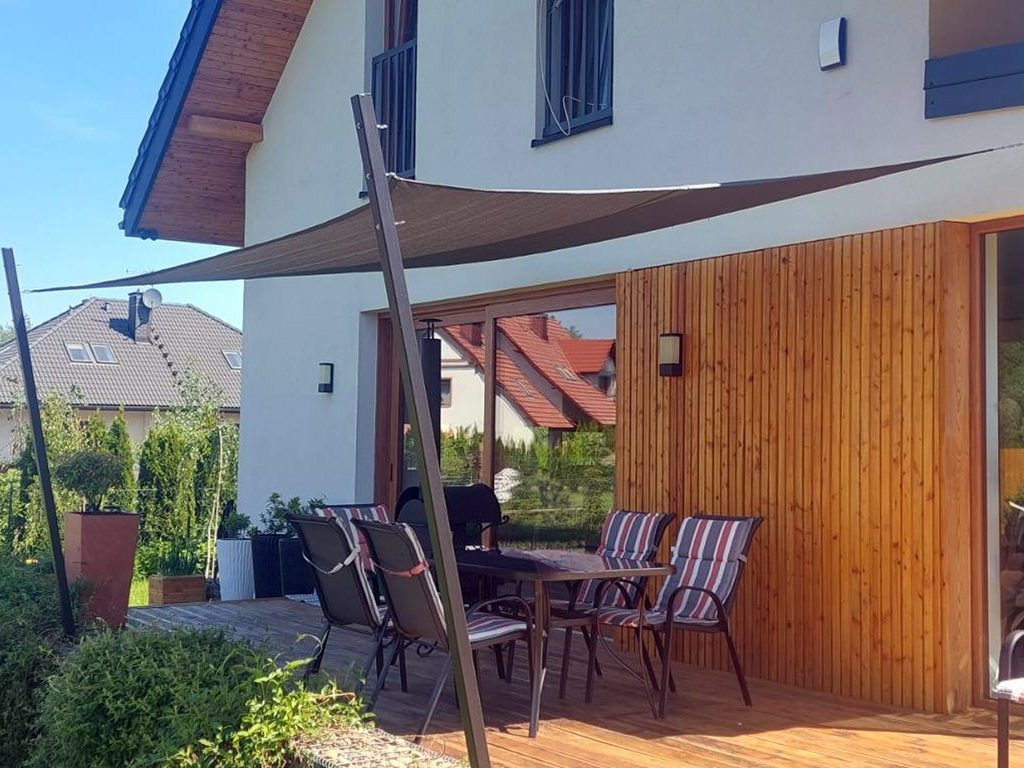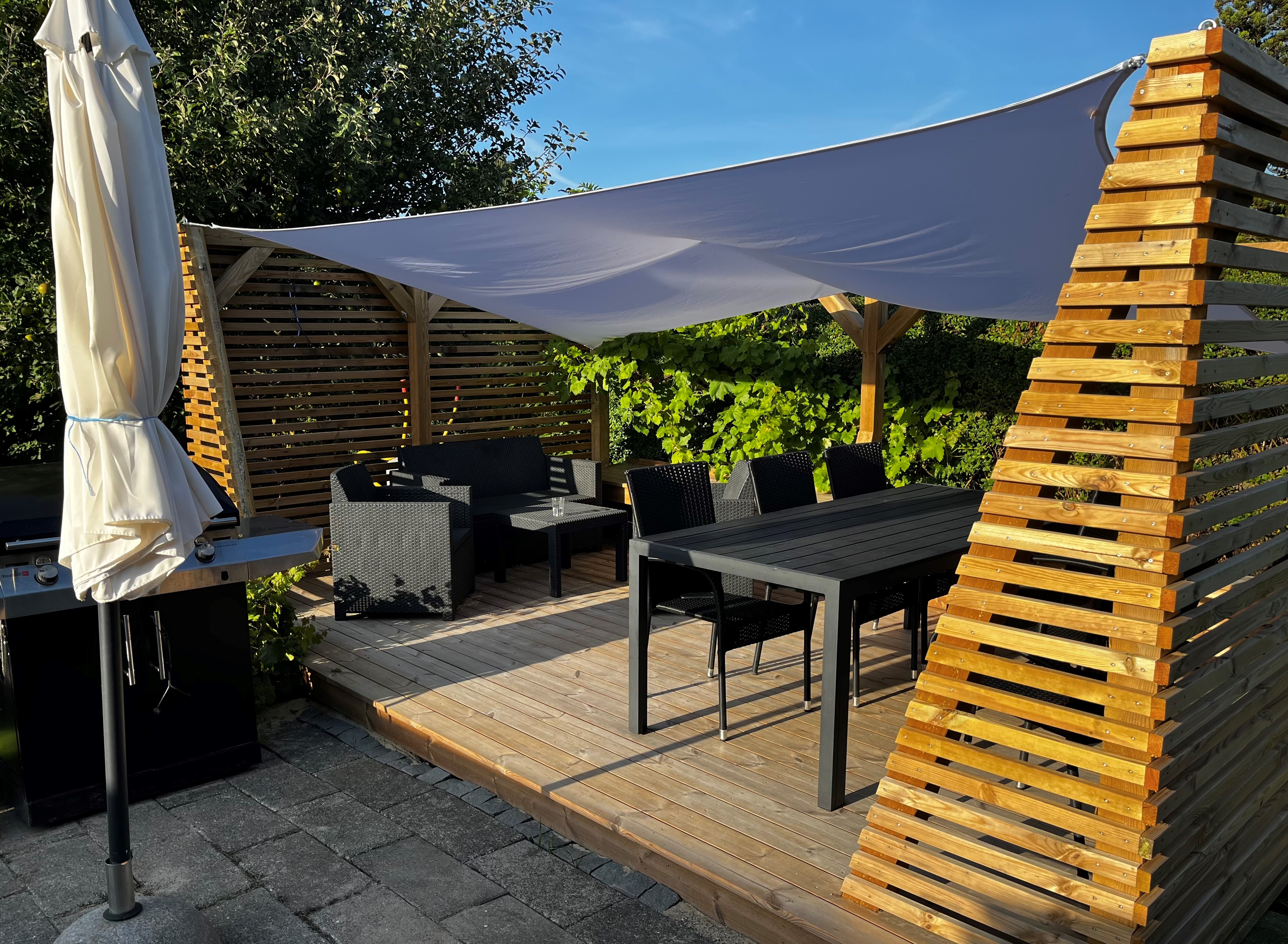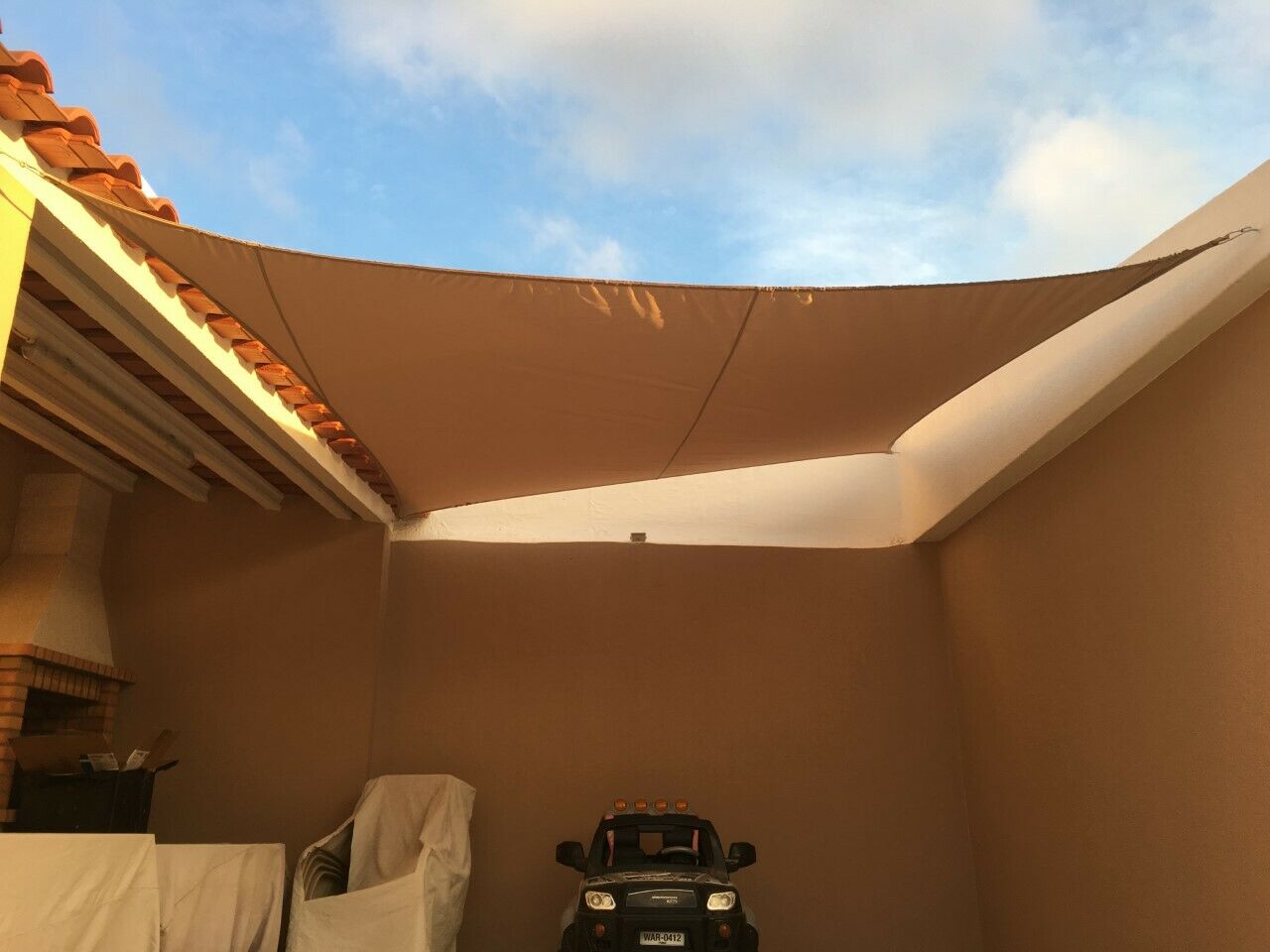
Waterproof sails (PVC or Decor) provide protection from rain and approx. 90–95% shading but require installation with slope and drainage. Breathable sails (HDPE or Mesh) allow airflow, are easy to install and maintain, but do not protect from rain. Optional drainage eyelets in Decor sails can support water management but do not replace proper installation.
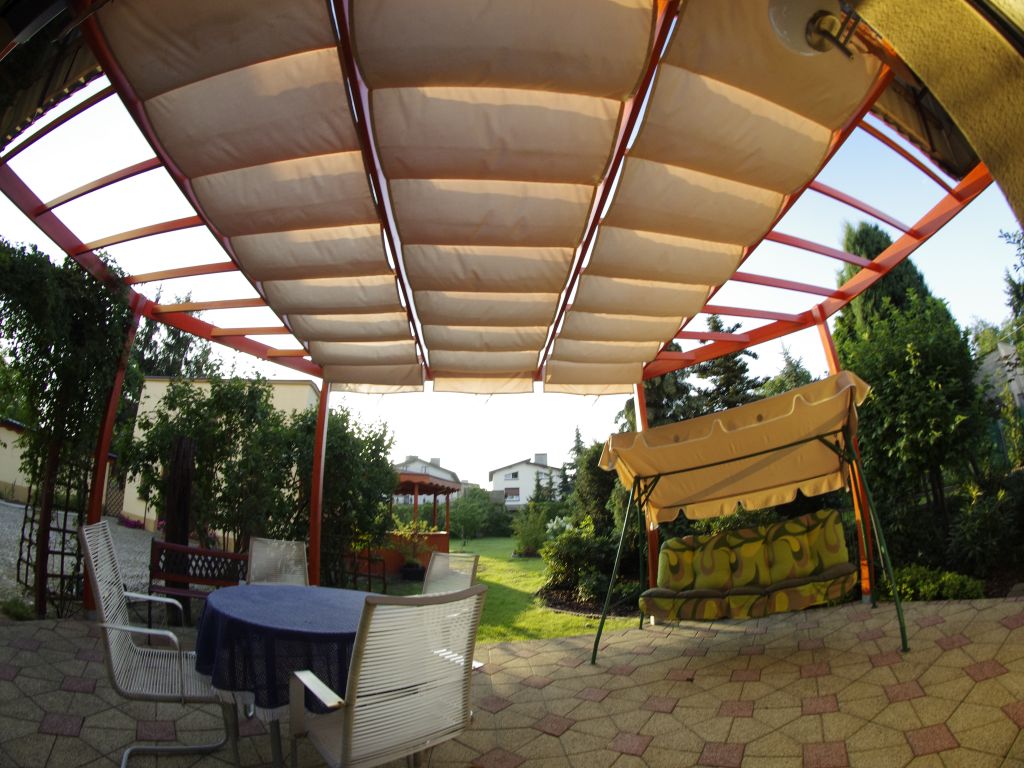
Sun strips are a simple shading solution designed for pergolas and outdoor structures. They provide protection from sunlight while maintaining airflow or, in the case of waterproof fabrics, additional protection from rain. Their main advantage is easy installation – strips are woven between beams and tensioned without complex systems. Depending on the material, they provide between 70% and nearly 100% shading, making them suitable for different outdoor conditions.
To extend the lifespan of a sun sail, it should be cleaned regularly (approximately every 2 months), properly dried, correctly stored and all mounting components should be maintained. Different materials require slightly different care methods, but all sails benefit from consistent maintenance and protection from extreme weather conditions. Proper care helps the sail remain functional and visually consistent for several years.
How to Install a Sun Sail in Your Garden
Installing a sun sail is one of the easiest ways to create shade in your garden or on a terrace. However, a proper installation requires more than just attaching fabric between points.
The most important factors are stable mounting points, correct tension and proper material selection. A sun sail works as a tensioned structure and transfers load to its fixing points.
Material choice is essential. Breathable fabrics such as HDPE allow air and water to pass through and can be installed flat. Waterproof materials such as PVC or Decor must always be installed with a slope to allow rainwater drainage.
During installation, the sail should be tensioned gradually and evenly. Uneven tension or weak mounting points can lead to deformation and reduce durability.
For best results, the sail should also be installed at a slight angle, even when using breathable materials. This improves performance and ensures better long-term stability.
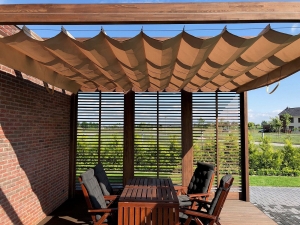
Horizontal Outdoor Roman Blinds for Garden and Terrace
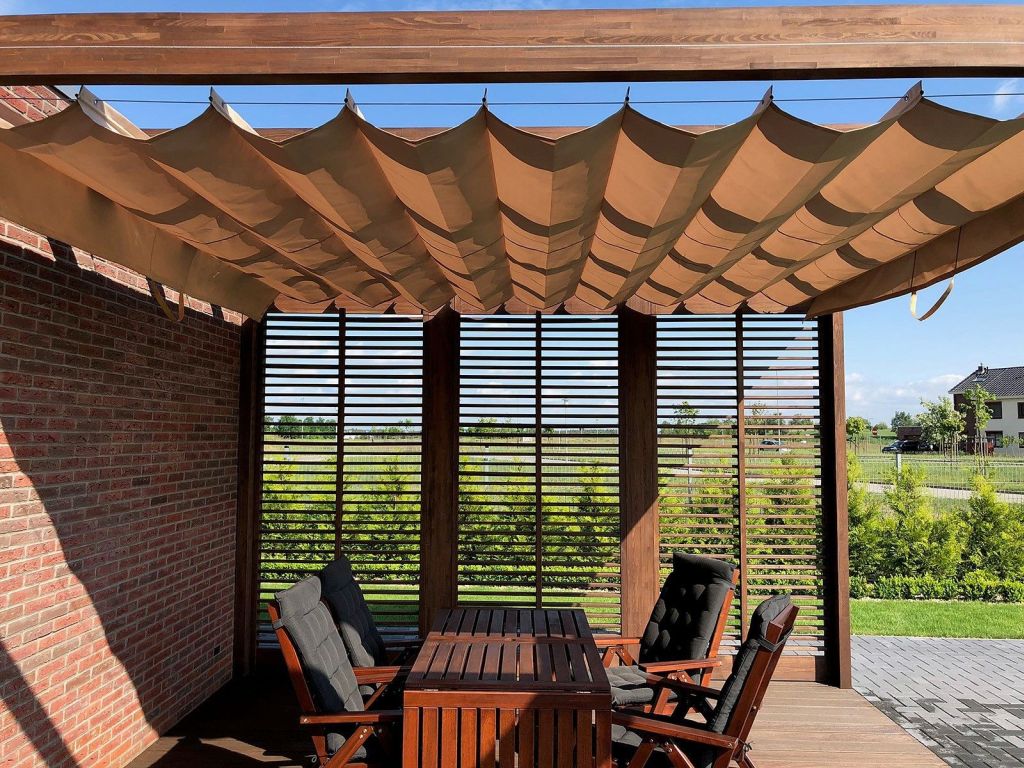
Horizontal outdoor Roman blinds are a practical and elegant solution for shading terraces, pergolas and garden seating areas. They provide effective protection from strong sunlight while improving comfort and privacy in outdoor spaces.
One of the biggest advantages of custom-made outdoor Roman blinds is the perfect fit to the dimensions of your terrace or pergola. A precisely fitted blind provides better shading, smooth operation and a visually balanced design.
Outdoor Roman blinds can be made from several durable materials depending on the level of protection required.
D
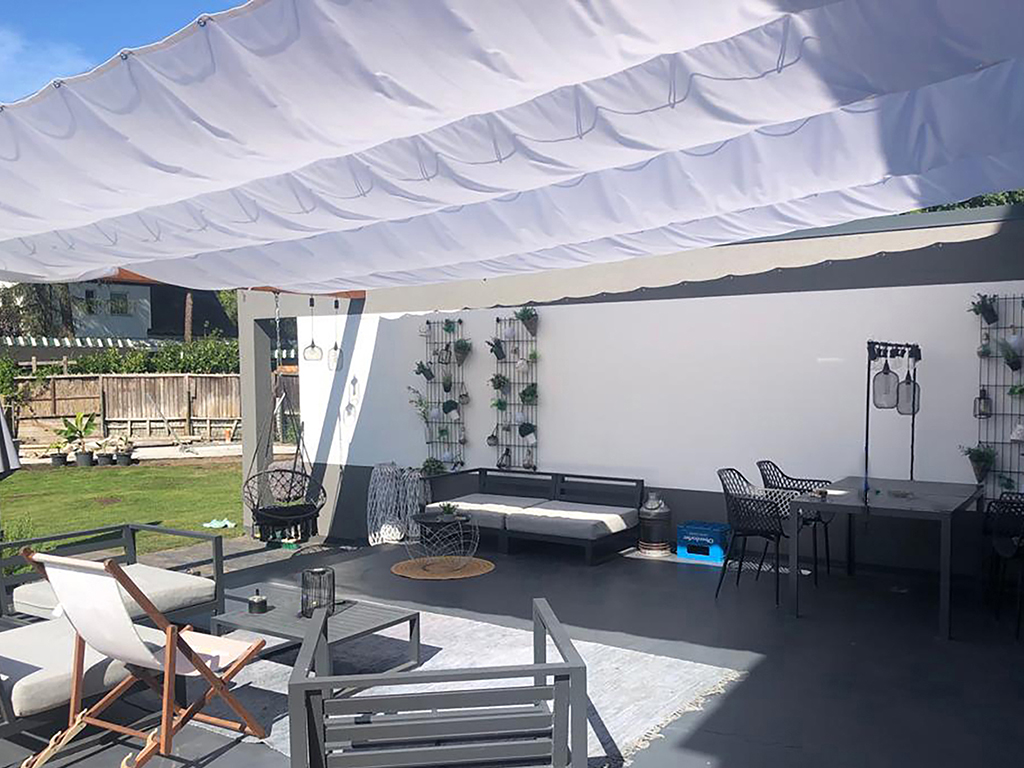
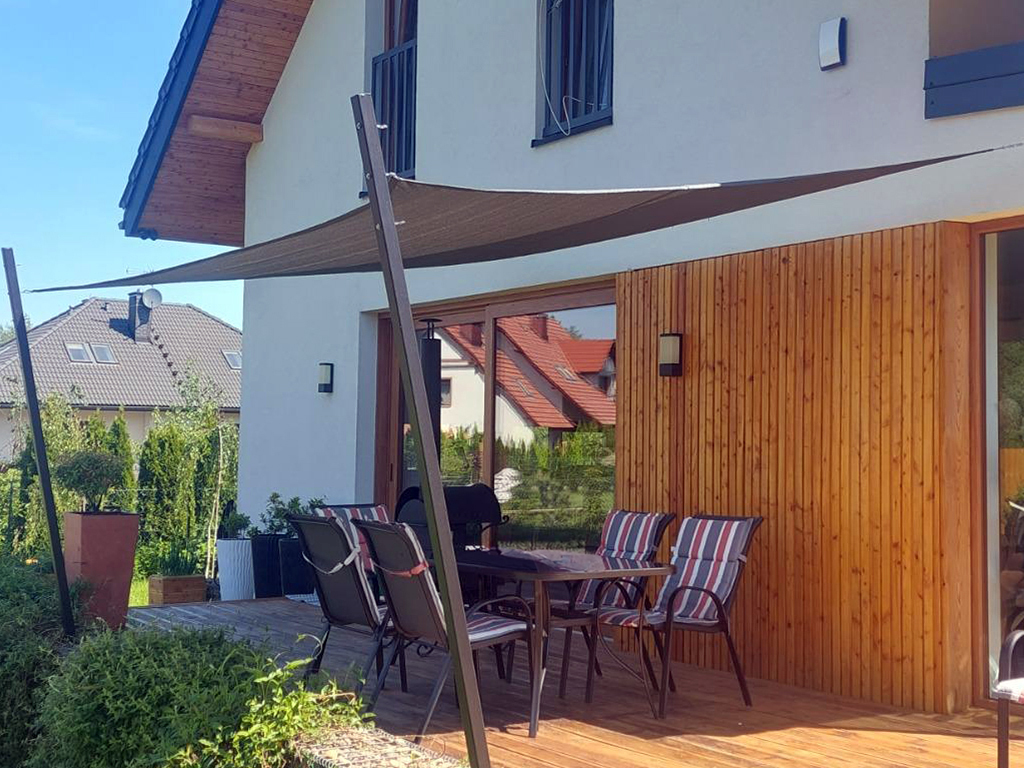
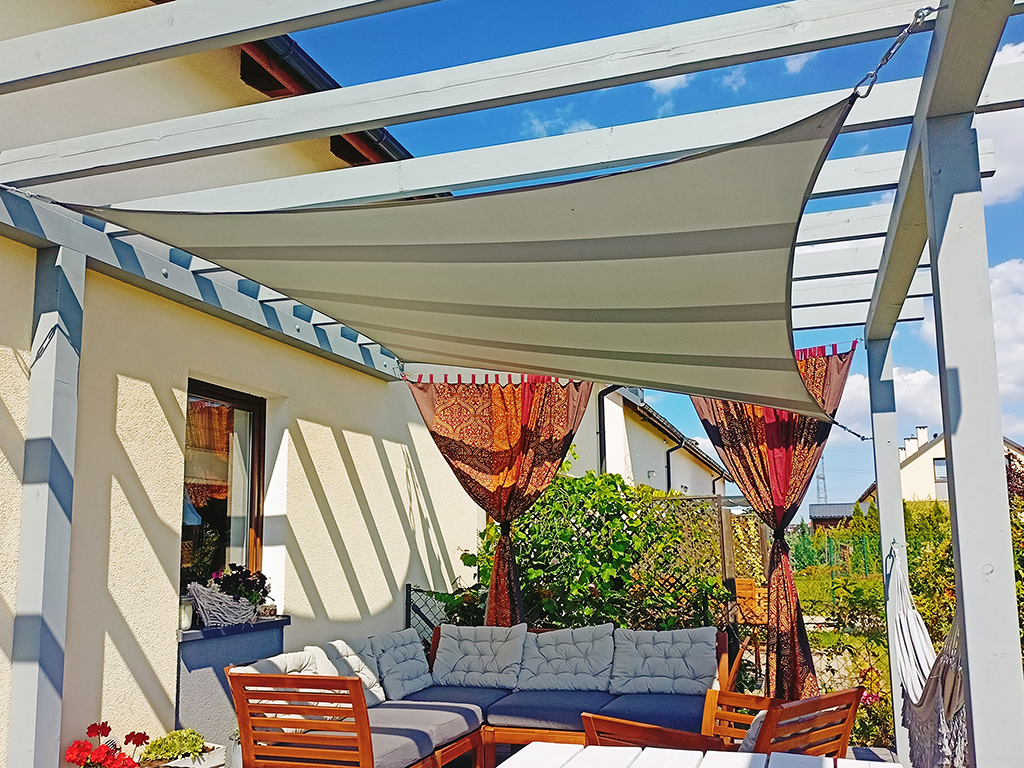
Sun sails are a modern and practical solution for shading gardens, terraces and outdoor seating areas. They combine elegant design with effective protection against sun and rain.
The performance of a sun sail depends largely on the material used.
HDPE fabric is breathable and provides excellent sun protection, blocking up to 95% of UV radiation while allowing air to circulate.
Decor 200 g/m² fabric offers sun protection and resistance to light rain, making it suitable for terraces and patios.
For full waterproof protection, PVC 650 g/m² sails provide a completely impermeable surface and high durability in outdoor conditions.
Mesh 270 g/m² is a cost-effective solution that provides moderate shade and allows rainwater to pass through.
Sun sails are valued not only for their functionality but also for their modern appearance. They create stylish shaded areas while maintaining an open garden design.
At shade4you.eu, sun sails are produced using premium outdoor materials and can be customised to fit different outdoor spaces.
A waterproof shade sail is one of the most practical ways to protect your garden seating area from both sun and rain. Unlike traditional umbrellas, shade sails provide larger coverage, modern aesthetics and flexible installation options.
The most important factor when choosing a waterproof shade sail is the material.
For many garden applications, Decor 200 g/m² fabric provides effective sun protection and resistance to light rain. It is commonly used over patios, terraces and seating areas where occasional showers occur.
If full rain protection is required, PVC 650 g/m² is the recommended material. This heavy-duty fabric is completely waterproof and designed for demanding outdoor environments.
The shape and size of the sail also influence its effectiveness. Triangular sails create dynamic visual designs, while rectangular sails provide larger shaded areas over dining spaces or terraces.
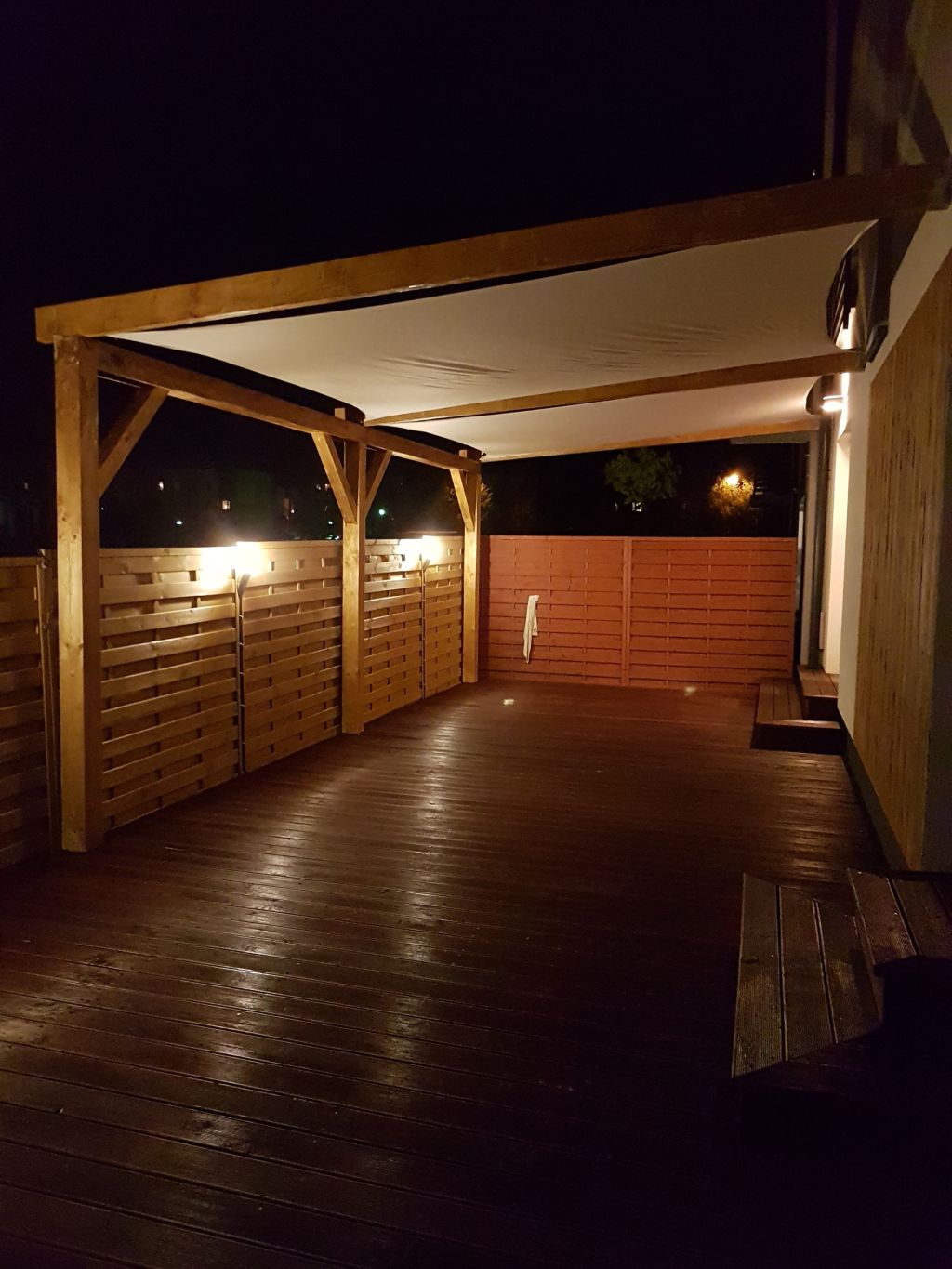
Proper installation geometry is essential. Waterproof sails should always be mounted with a slight slope to allow rainwater to drain properly.
The amount of shade provided by a sun sail depends mainly on the type of fabric used and the installation height and angle of the sail.
Different materials provide different levels of shading and thermal comfort. In this guide we explain how much shade you can expect from Mesh, Premium Decor, HDPE and PVC sun sails, and which fabric works best for terraces, pergolas or relaxation areas.
Whether water accumulates on a shade sail depends mainly on the type of fabric used. Some materials allow rainwater to pass through, while others are fully waterproof and require proper installation slope.
Shade sails can be manufactured from HDPE mesh, Mesh fabrics, Premium Decor waterproof material or PVC 650 g/m². Each of these fabrics behaves differently during rainfall.
This guide explains how water interacts with different shade sail materials and how to choose the right fabric for UK weather conditions.
Correct tilt is essential for the proper performance of outdoor shading systems such as sun sails, Roman blinds and retractable shade sails.
A well-designed slope improves rainwater drainage, reduces fabric stress and maintains stable shading throughout the day. Incorrect installation can lead to water pooling, uneven tension or shade escaping from under the sail as the sun moves.
This guide explains how shading systems should be tilted when installed on pergolas, terraces or building walls.
The maximum size of a shade sail depends on several technical factors, including material strength, wind exposure and the distance between mounting points.
In most installations, a shade sail performs best when the surface area does not exceed around 20 m² and the maximum side length remains within 7 metres. Larger sails are technically possible, but they require stronger mounting structures and careful design to ensure proper tension and stability.
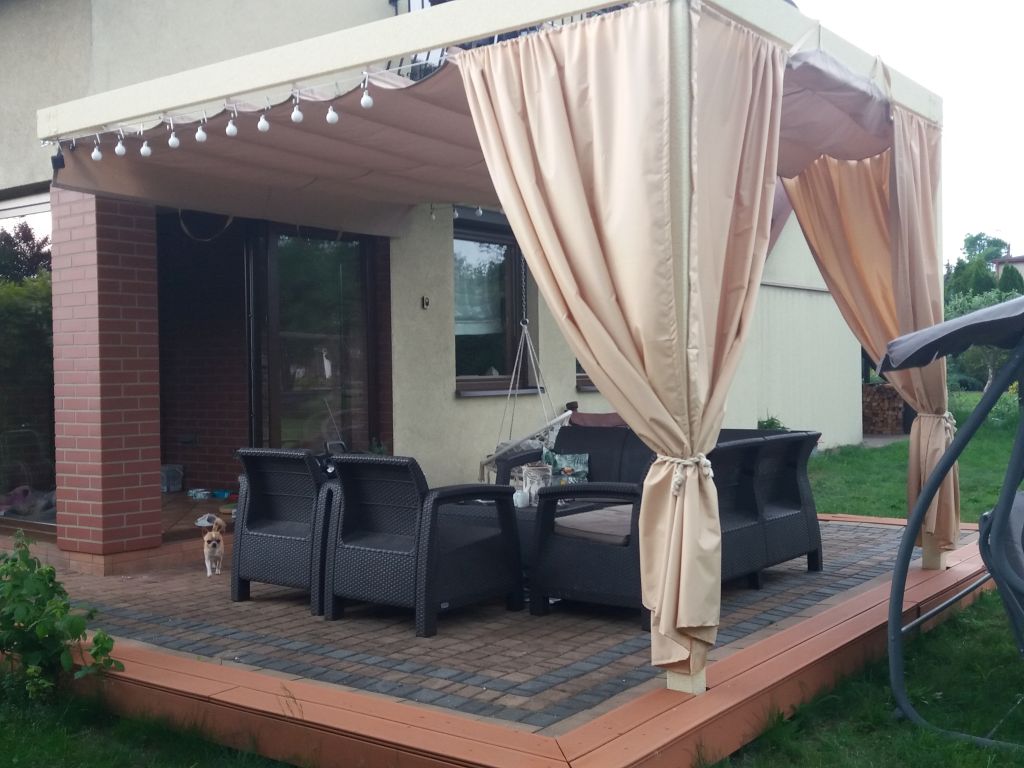
Outdoor curtains are a practical way to improve comfort on terraces, pergolas and garden seating areas. They provide shade, increase privacy and help reduce the effects of wind and light rain while maintaining an elegant outdoor appearance.
Choosing the right material is important. Heavier fabrics offer stronger shading and better privacy, while lighter materials allow more airflow and maintain visibility through the curtain. Proper sizing is also essential – for outdoor installations, curtains should normally match the exact width between mounting points to ensure stability and correct movement.
Latest articles