+48 518 537 385
 office@shade4you.eu


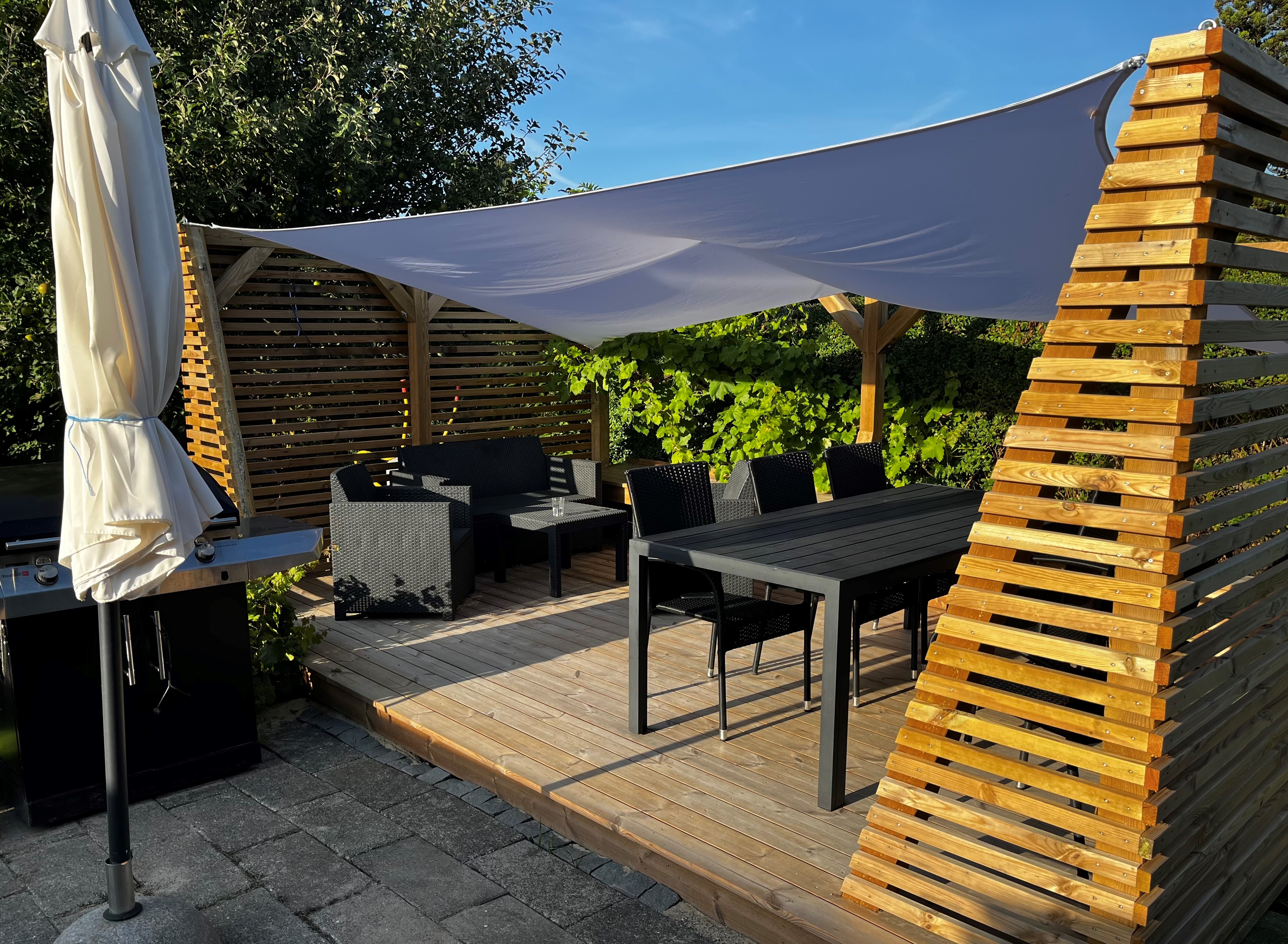
How to Install a Sun Sail in Your Garden: A Beginner’s Guide
Quick Answer
To install a sun sail in your garden, you need stable mounting points, the right type of sail and proper tensioning. The sail must be installed under controlled tension and, depending on the material, with the correct slope.
Waterproof sails (such as PVC or Decor) always require an angle for water drainage, while breathable sails (HDPE or Mesh) can be installed flat, although a slight tilt is still recommended for optimal performance.
Introduction
A sun sail is one of the most effective ways to create shade in a garden without building a permanent structure. It can transform a terrace, define a seating area and significantly improve comfort during warm days.
However, a sun sail is not just a piece of fabric stretched between points. It is a tensioned outdoor structure exposed to wind, sun and sometimes rain. Because of this, correct installation is essential for both safety and durability.
This guide explains how to install a sun sail step by step, with a focus on practical decisions and common mistakes.
Which Type of Sun Sail Should You Choose?
Before installation, it is important to select the right type of sail based on how you plan to use your outdoor space.
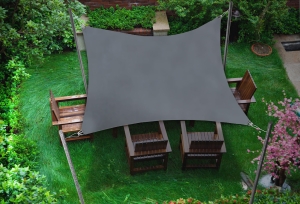
Corner-mounted sun sails
This is the most common and beginner-friendly solution. It creates a clearly defined shaded area and can be mounted to:
• house walls
• fence posts
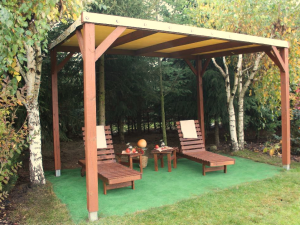
• pergola structures
• dedicated steel or timber posts
Retractable and Roman-style systems
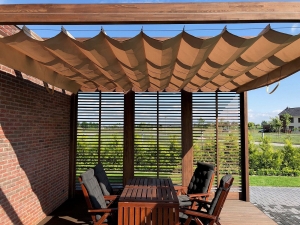
These systems allow you to control the amount of shade. They are mounted on cable systems and are commonly used on pergolas.
They require more precise installation but offer greater flexibility.
Sail roofs
Sail roofs are designed for more permanent installations and can provide protection from sun, wind and rain depending on the material.
Curtains and side covers
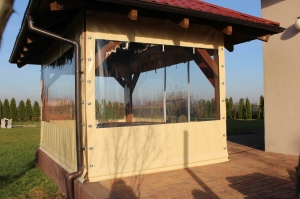
Often used together with overhead sails, they improve privacy and reduce wind exposure.
How Do You Choose the Right Fabric?
The material determines how the sail performs.
Key factors to consider:
• level of shading
• airflow
• rain protection
• durability
• maintenance requirements
Breathable materials such as HDPE provide good ventilation and comfort in hot weather.
Waterproof materials such as PVC or Decor offer protection from rain but require proper slope and tension.
Choosing the right material is especially important in exposed areas. In more complex setups, made-to-measure solutions and technical consultation help ensure the sail performs correctly in real conditions.
What Tools and Components Do You Need?
Before installation, prepare:
• sun sail
• mounting kit
• turnbuckles or tensioning devices
• measuring tape
• drill or screwdriver
• appropriate anchors or fixings
Important: a tensioned sun sail generates significant forces. Hardware must be treated as structural, not decorative.
Where Should You Install a Sun Sail?
Choosing the right location is crucial.
Consider:
• sun direction during the day
• how you use the space
• available mounting points
• need for shade vs rain protection
A sail that looks good but does not shade the right area will not be functional.
How to Fix Mounting Points Correctly?
Mounting points must be:
• stable
• correctly positioned
• resistant to load
• properly anchored
They can be installed on:
• building walls
• timber beams
• steel posts
• concrete or masonry structures
Weak mounting points are the most common cause of installation failure.
How to Tension a Sun Sail Properly?
Tensioning should be gradual and even.
Recommended process:
- Attach all corners loosely
- Check alignment
- Tighten step by step
- Adjust each corner evenly
- Check final shape
The sail should be tight, but not overstressed.
Why Does the Tilt Angle Matter?
The tilt angle affects both performance and safety.
For waterproof sails (PVC, Decor), the sail must always be installed with a slope. This allows rainwater to drain off and prevents pooling.
For breathable sails (HDPE, Mesh), flat installation is technically possible because water passes through the material.
However, even with permeable fabrics, a slight angle is recommended. It improves tension, reduces stress points and enhances the visual result.
Practical Checklist Before Installation
Before finishing the installation, check:
• correct sail type
• appropriate material selection
• stable mounting points
• proper hardware
• even tension
• correct tilt angle
• functional shaded area
Common Mistakes
Weak mounting points
They cannot handle the load of a tensioned sail.
Incorrect tilt angle
Especially problematic for waterproof materials.
Uneven tension
Leads to deformation and stress.
Wrong location
Results in ineffective shading.
Expert Perspective
From a manufacturer’s perspective, the performance of a sun sail depends on geometry, material and mounting quality.
Even premium outdoor materials cannot compensate for poor installation.
This is why custom-made production and individual technical consulting are often recommended for non-standard spaces. They ensure that the sail fits the installation, not the other way around.
Summary
Installing a sun sail requires planning, not just installation.
The key factors are:
• correct sail type
• proper material selection
• strong mounting points
• even tension
• correct tilt angle
A well-installed sail will provide comfort and durability for many seasons.
FAQ
Can a sun sail be installed flat?
It depends on the material.
Waterproof sails (PVC, Decor) must always be installed with a slope.
Breathable sails (HDPE, Mesh) can be installed flat, but a slight tilt is recommended.
What is the easiest sun sail to install?
A corner-mounted sun sail is the simplest and most beginner-friendly option.
Can I mount a sail on a fence?
Only if the structure is strong enough to handle tension loads.
Should a sun sail be very tight?
It should be evenly tensioned, not overstretched.
Total reviews: 19 reviews